
Arriving: Year 2
Berlin diary entries from 2023, translated
Building on the notes from 2022 that I posted last week, I invite you into the second level of the emigration journey. After the initial overwhelm and powerlessness, I started to trust that I had actually emigrated.
Having started learning German and making local friends, especially other migrants, I became increasingly curious about the city I was in.
I passed the probation at work and moved on to the B1 German course. I joined a lot of Meetup events where I didn’t like the vibe. I was lucky to find a queer book club I loved (and am still a part of). I attended my first activist and political meetings. I started asking difficult questions.
I catsat for other Russian emigrants who needed a vacation because I missed having cats. Living in someone else’s apartments, feeding their pets, I tried to imagine living in another city pocket: Moabit? F-Hain? Kreuzberg? Biesdorf?
I still ended up liking my Kiez the best and closed the catsitting practice, satisfied. I don’t miss cats anymore, I’d moved on.
But the biggest change was that I started noticing the city. I also noticed how isolating the city is if you don’t engage with it.
January 6, 2023
The nightmares I get now:
I am sitting in a room full of strangers. It’s a seminar on something related to work.
— Is this a Dutch course? — someone next to me asks the teacher.
— No, this is not a Dutch course, — he answers. — This is a course in German AND Dutch.
— And what about me, — I ask timidly.
The teacher shrugs indifferently, and I wake up in a cold sweat.
February 5
It is snowing. A German acquaintance and I are walking through a cemetery (we discussed the TV series Unorthodox we’d both watched and decided to visit the cemetery where it was filmed).
She asks:
— Do you remember the moment of the Berlin Wall falling? What did you do and where were you then?
I recognize the question's connection to the local culture. Similarly, you’ll be asked “Where were you on 9/11?” in the US. These big changes shape a generation: big things happening when you’re a young adult. It gives a shared worldview, a sense of belonging.
But the thing is, even though we are both older millennials and we’ve both seen Unorthodox, different events shaped us in the past. I don’t think I ever cared for Berlin or its Wall in the 80s or the 90s. I had wins and disasters closer to home.
But since I’ve moved to Berlin, I probably need to know more about the important local events? I catch myself not knowing the precise date of the fall of the Berlin Wall and make a promise to read the book a friend recommended, “The Collapse: The Accidental Opening of the Berlin Wall” by Mary Sarotte.
I of course know about the existence of the Wall. I am from the Eastern Bloc, after all. I’ve been to Berlin as a tourist many times before moving here, always visiting the remaining pieces of the Wall, museums, and Soviet monuments. But I never cared. It was not mine. It was them who needed to care.
I decide to start now. I ask my acquaintance to tell me where she’d been at that moment so I could start collecting data.
— Hmmm, let’s see… I was four. We weren’t living here, by the way. I grew up in the West and only recently moved here… I remember the news of the Wall falling being announced, but in the background, kind of. I don’t remember feeling anything.
February 20
For seven months, I’ve been pulling Berlin onto myself like a sock onto a foot. I size things up, explore, and evaluate. I try to find the words, at least for myself. What is Berlin of 2022-2023?
I am imagining a muscle that is alternately stretching and contracting. Or, accordion bellows: the sound only comes out when the instrument is pulled or pushed. Berlin is simultaneously everything and nothing.
You could accidentally land at the same street for different reasons for three days in a row, or you could miss something that happens just under your nose.
There is no magical realism that I loved so much in St. Petersburg. There is no flex in being businesslike and successful like in Moscow. Here, everything seems suspended in mid-air, like droplets of water in the mist. Extend your hand and grab it — but only if you show initiative, and only with consent. Your hand will stay dry otherwise.
In such a non-sticky environment, it’s tough to find your people. Especially your people who have time and capacity for you. The choice is infinite, so many keep choosing. It feels like you can always give it a little more time, and then new ways open up that were previously hidden.
It’s an illusion of an endless possibility, the famous FOMO of Berlin, an illusion of the marshland. The swamp spirits are dancing, playing with your brain.
The accordion bellows are pulled open and pushed closed. The movement continues.
March 7
I passed the probation at work with some difficulty and moved on to the next energy-heavy task: networking, and it better be queer.
At the bar event, I learn that the group meets regularly. I take a chair at the big table. It is a little too loud, a little too many people, everyone is a little too drunk a little too quickly. I am sober and overwhelmed. I learn that this group takes part in the 8 March demo, and I am set on going there, too. Who knows? Maybe I even make friends. So I strategically suffer through the Stammtisch evening.
Someone sitting next to me is worried that it’s difficult to remember many names of everyone around.
I joke:
— Don’t worry. We’ll tell each other a few graphic childhood trauma episodes, and it won’t be possible to forget who is who.
An Italian thought that I wasn’t joking: “WHAT? No! There is no need to tell awful stories! You just need to come 3-4 times to our meetings, and you’ll remember everyone.”
April 12
With some people I’ve met at the bar, we later decide to hike in Grunewald.
We briefly chat about our backstory. Everyone is from somewhere starting with M. I was born in Moscow; the Australian emigrant is from Melbourne, and the American emigrant, from Baltimore, Maryland.
One of my companions admits that she learned Russian in childhood. She tries to remember something and comes up with Gena the Crocodile (see the post on Soviet Animation). She asks if I remember his birthday song. I sure do.
I start singing in Grunewald:
Let the pedestrians splash awkwardly through the puddles!
The water runs like a river down the street.
The strangers on the street have no idea
Why I’m so cheerful on this gloomy, rainy day.
Oh, I’m playing my accordion
For everyone passing by to see.
Unfortunately, a birthday
Happens only once a year.
Thank you, she says, now I remember it.
But I don’t understand something, she says.
Why is it necessary to focus on the sadness of not having a birthday more than once a year if you could be happy that it is happening today instead?
I wish I could explain to her why happiness is bigger when there is a pinch of existential sadness. But I even had this taught to me at the screenwriting workshop once.
April 26
During another international queer hike, we discuss cultures and stereotypes.
— You are very bleak sometimes, and I think it’s a cultural thing, — tells me a new friend who moved to Germany from South-East Asia.
— What do you mean, bleak? — I am not sure I understand.
— Well, we’ve seen a pipe back there, and your first assumption was that it is a crematorium.
I frown.
— But what if it was a crematorium? They probably exist in Brandenburg, right?
— But it was the first idea you’ve had! That is bleak!
Another Russian emigrant, who moved to Berlin ten years ago, offers:
— If you are interested in crematoriums, I know a pretty big one in Ruhleben.
I pull out my smartphone and search for a rock song that was popular in my school days and was always on the radio. The band’s name was Krematorij, this is why I remembered it now.
I turn on the song “Trash wind” and try translating the lyrics on the go. In English, they do sound bleaker. But the melody is melancholic and soothing.
Trash wind, smoke from the chimney,
Nature’s weeping, Satan’s laugh.
And all because
We loved chasing the wind and scattering stones.
The sandcastle I built
Was washed away by the wave long ago.
My gaze resembles yours —
There’s nothing in it but dreams and forgotten joy.
Smoke in the sky, smoke on the ground,
Machines instead of people,
Dead fish in a dried-up river,
The stinking heat of the desert.
My death will cut the chains of sleep
When we are together.
— Come again, why did you have to listen to such songs in your childhood? — my new friend asks.
— Well, it’s not that I had to listen to it. It was just always on the radio, and a lot of 80s songs are sad.
I google the song’s history.
— So Wikipedia says that the text was inspired by the short story of Andrei Platonov… and it wasn’t even written for the Krematoriy repertoire, but for a production of Bertolt Brecht’s “Drums in the Night” at the Moscow Youth Theatre.
My new friend tries to change the topic.
May 3
In my German course, we are covering relative clauses with the word “which” in German (corresponding articles are used, depending on the gender).
To practice, we need to give examples, answering the question “What makes your life amazing?” (The question, WHICH feels absurd to me. Why should life feel amazing, after all? Meaningful or full would feel more fitting).
The time is up. Everyone reads aloud.
Other people share that their life is made amazing by:
a partner they feel safe with,
the city they grew up in,
friends they see every day,
a job that inspires them,
travel that fills them up with excitement,
sport that challenges them,
and so on.
My list was more around:
my bed, which is big,
my apartment, which is quiet.
The lesson time is up. The time change means we finish classes very late.
I disconnect from the call and go to my big bed in my quiet apartment.
May 5
On another hike, I asked the emigrant from Bulgaria about the cultural shocks she’d initially encountered in Berlin. She has been here for 8 years.
— Small talk, for one! In Bulgaria, you can easily strike up a conversation on public transport. I really like your skirt! And that’s it; you are chatting like friends now. I’d chat people up in the supermarket queue. It feels warm, you know? Less lonely than here. If I make a compliment on the street, people think I am weird. Everyone is a little cold.
I am nodding, but not in the way “I understand you so well and I suffer from the same thing”, but in the way “oh really, good to know, then I’m probably in the right place, because I hate small talk as well.”
May 9
— I like cemeteries, — I am dropping sofly to see if a person I have a conversation with is scared of such topics.
It’s better to know earlier than later, and I noticed that many people in Berlin are not comfortable speaking about death. For me, it’s just a regular topic, one of the existential things you cannot keep life clean of, and I don’t think we’ll be friends with someone who faints at the word “cemetery”.
— Me too, — he answers.
I smile, having learned that our connection has a future.
He adds:
— Especially with tuna.
I am confused.
He is confused.
So in the end, he likes sandwiches. And he didn’t hear me correctly, or maybe couldn’t believe what I said and replaced it with something more probable.
June 20
Eleven months.
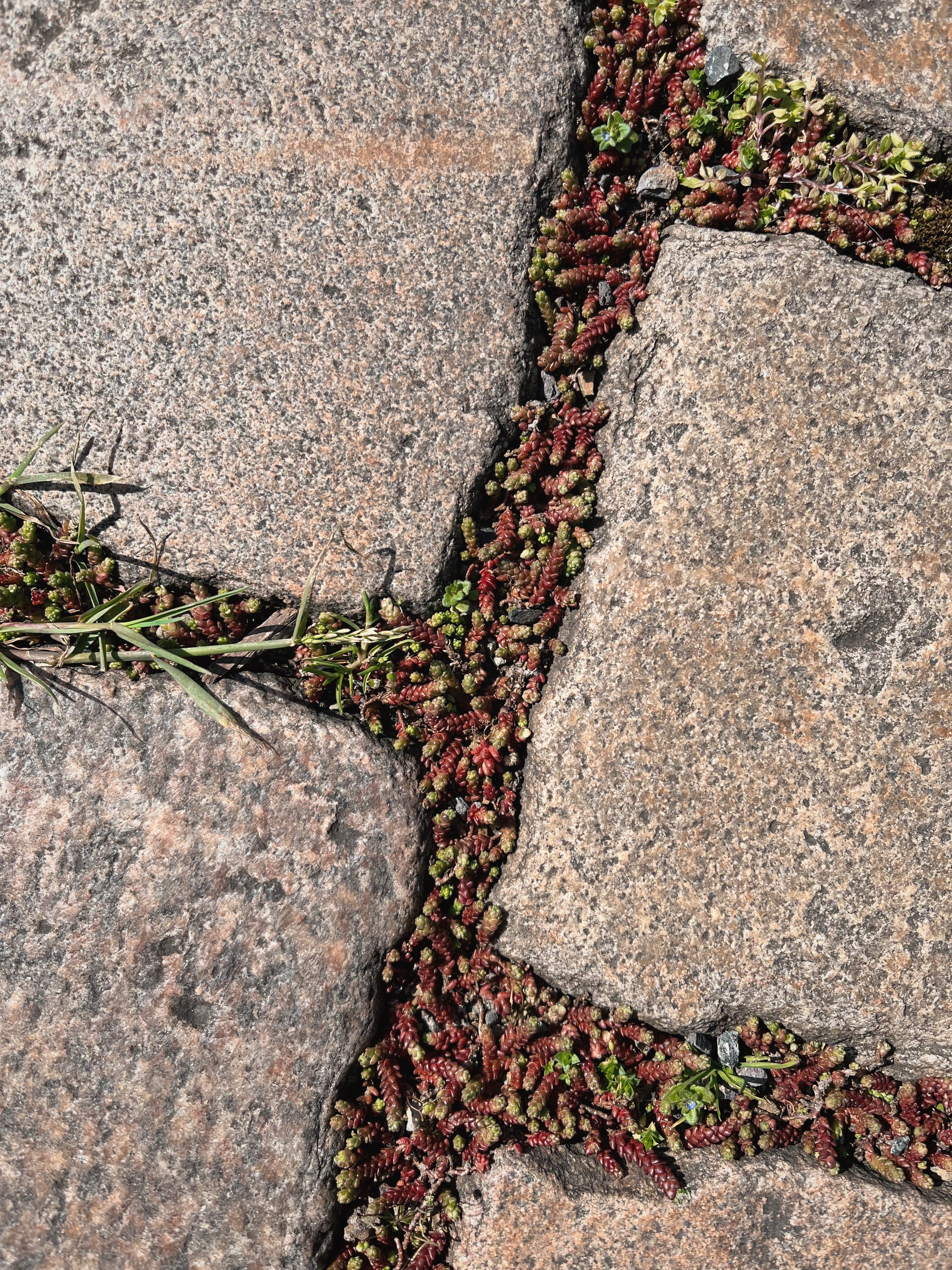
You get used to Berlin, an old, stretched-out, patched, soft, and comfortable coat. Berlin will accept you just as you are, with or without Anmeldung. You slip your arms into the sleeves. This garment wasn’t tailored for you, yet it fits. Worn and faded, cozy and familiar. A vintage catch that was waiting who knows how long.
Waiters who switch to English after you open your mouth. They hear the accent and conclude it’s more comfortable for you to speak English. The German neighbor telling you, in perfect English, that she had a horse as a child and that she misses the area where she grew up. No stray cats but bunnies sniffing in the bushes, or foxes sniffing bunnies in the bushes. The robin singing her heart out next to the yoga studio. Cacao on the pea milk. A Biergarten at the end of a well-planned hiking route. Unexpected construction work at the U-Bahn you needed this evening, and so you walk for an hour instead, enjoying warm air with a burning sunset as a backdrop. A bank holiday in Bavaria that doesn’t exist in Berlin, so a colleague doesn’t answer in Slack and no one thought it needed to be announced. Niche events that you now have such easy access to, but you had no idea they even existed when you arrived, and now you have no one to tell about them, because there are too many niches and everyone’s preferences are different. German language that you’ve already put so much energy into, and English that drifts away because German gets its special focus, and Russian, which is smoking silently on the sidelines. Your Russian is now a virtual language for your imaginary friends in a small box in your palm. You still record voice notes, and you get voice notes back, but for the brain, they are not material for survival, compared with English or German, so it lets go, and you are fumbling in an empty pocket for a word you once knew so well in your first language, but now it’s gone, together with an English word that you’d learned when you were six, and all that’s left is Knoblauch.
You lived somewhere else, and you didn’t even know that you needed something like this. Now it’s your only reality, the back strap of a worn-out, second-hand coat that was kindly draped over your shoulders by the country of Germany, which needed fresh migrants because the society is getting older, leaving their coats on the hooks for people who come after.
But this coat is alive, and it becomes a part of your body.
The only question mark is my poor brain. It needs to find a way to process everything.
July 3
I am telling Europeans spooky stories. A German acquaintance asked me about renting in St. Petersburg, and I mentioned that over more than a decade of living in different apartments, I'd never signed a contract.
I think he didn’t get the full gravity of what I was saying. But he was already a little scared.
I tried to explain: what use is a document that, even if signed, doesn’t mean anything? Even with a family member, a signed paper doesn’t protect you from anything. It’s just a letter of intent at best, a gentleman’s agreement. So why bother if it has the same power as no contract? Even more so, the other side could frown at the suggestion of signing: do you plan to blackmail me later? Do you have good connections at the court? It could be a reason to decide against renting to you. Too suspicious.
In practice, both sides could potentially disregard what is written. There are no tools to solve this, other than connections with official or unofficial powers. In court, the person with more money and better connections wins. The case may drag for years without any result. It gives more security to have a scary uncle who works in the police or has been in jail than to have a contract.
A German acquaintance’s eye begins to twitch.
I try to explain that it’s not that dark:
— It’s just that you need to have a good working relationship. Once a month, you bring cash to the apartment owner. Answer her questions on when you’ll find a husband and get children. Drink tea and eat cake. Smile and look unsuspicious. Bring some flowers, make some compliments, you know? So they would feel bad about pushing you out if they heard they could get more money.
— What do you mean, push you out?
— Well, imagine they say, “Oh, our daughter decided to come back to the city, we need the apartment back. You have three days.” But if you have a good working relationship, they will give you a month or two because they feel sympathetic.
A German acquaintance looks like he’s eaten a fly. Maybe a funny story will fix the mood?
— There was one studio apartment I rented with my ex. The bed was 90 centimeters wide, and we weren’t allowed to change it, and there wasn’t any space to put another one. We weren’t allowed to use any of the wardrobes or shelves. Every wardrobe they had was full of their things, locked with a key. So imagine, we had to keep all our things under the table… but it lasted only for half a year, and we always had a good laugh about it.
He doesn’t seem to find it funny.
August 19
— German language is very poetic, — I tell my fellow travelers, pointing at the panel in the train we’re taking to Sächsische Schweiz for a hike.
They look skeptical.
— Look, it’s so boring in English: next connections. But it’s Reisemöglichkeiten in German. The possibilities of travel! Very poetic.
August 27
My new German acquaintance is originally from the East; therefore, he studied Russian at some point.
I ask him if he remembers anything.
He furrows his brow and spews out three words that make together a perfect, simple sentence.
Ya. Budu. Borsch.
(translates like “I will have a beetroot soup”)
September 6
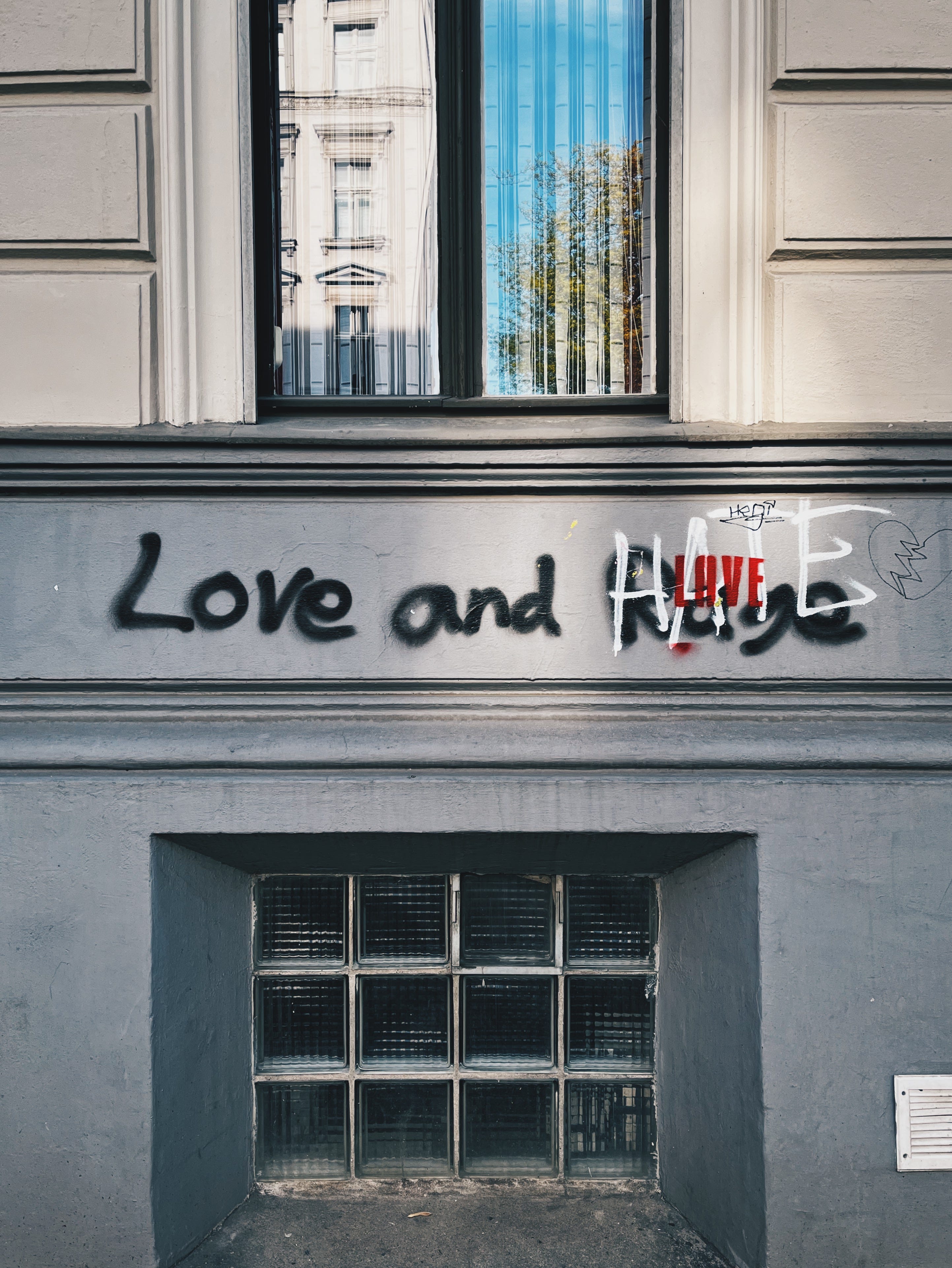
I went through a couple of rough weeks at work, pulling something impossible together and getting closer with people on my team. As a result, we started speaking more openly with each other, filtering less. And when I’m tired, I start joking. It’s a coping mechanism.
— Look into these tired eyes, — I move closer to the camera at the end of the meeting. — After a burnout ten years ago, love for the career doesn’t live there anymore.
— It is very poetic, and very dramatically Russian, — answers the colleague with a poker face.
He doesn’t know the song “Love doesn’t live here anymore” by a pop singer, Vlad Stashevsky, whose tape I loved in the second grade, so he doesn’t get the joke.
October 2
In the queer book club, we are discussing that autumn has arrived (the exact time of its arrival this year: 23.09 at 8:49), so we could do a themed event as a group.
Everyone likes the idea of spooky October. I don’t like spooky things in October because the world is already too spooky.
One person remembers a fitting horror movie and describes the plot.
— But what was the title?
— It is called Attachment…
Everyone is laughing now. People in Berlin usually find the idea of attachment to be scary.
— Sounds actually horrible, — someone sums up.
October 4
In my (Russian-speaking) German course, we were discussing what people like most about Berlin. In the end, people found it easier to say what they love the least.
One person said she doesn’t like the city at all. She arrived from Ukraine and wasn’t planning to come, but she needed to go somewhere because her house had been destroyed and the town was dangerous to stay in. Now, she isn’t happy with where she lives, and she rarely leaves the apartment. Works remote in tech and has no local friends or reasons to go outside. Doesn’t really know what Berlin is and has no curiosity to learn.
Another person found only one thing she likes in Berlin:
— There is an airport, so you can travel around Europe.
I remembered a joke from my time in St. Petersburg.
— How to spend a weekend in Moscow with gusto?
— Take a night train to St. Petersburg on Friday.
October 7
Was walking with a friend. She has been in Germany for ten years already. Speaks German, works in German. Integrated.
We approached Unter den Linden, and I asked her if we could walk towards Tiergarten and then the Reichstag: to sit by the water. Sometimes I feel suffocated without access to the large water reserves. In St. Petersburg, the river is majestic, and in half an hour by train, you get to the Gulf of Finland (the other side of Ostsee).
Imagine that the Liteiny Bridge over the Neva River is 396 meters long. The Troitsky Bridge that brings you to the Field of Mars is 334 meters long.
The Spree next to the Reichstag is around 35 meters wide.
It’s still better than nothing, and it’s soothing to look at the moving water. Excursion boats are gliding past us. This is familiar. This feels normal.
We bought currywurst at the kiosk next to Brandenburger Tor and are poking at it with chopsticks while sitting on the stairs. The sun is going down.
An excursion boat, “Charlottenburg,” is passing by, then “Prenzlauer Berg.” In Moscow, they would have names like “Moscow-144”, and in St. Petersburg, “Brave” or “Venice of the North”.
— Does it remind you of anything, looking at these boats? — I ask my friend.
— No, — she answers. — Why are your eyes red? Do you think the currywurst is too spicy?
October 23
We are discussing relationships in a group of people from different countries.
One of us has grown up in a migrant family with difficult relationships between parents’ families. She says:
— Isn’t it the case for everyone that it’s difficult to trust people? Don’t everyone feel that you should reject people once they come closer, because it’s safer to be alone?
Everyone is awkwardly quiet. It feels like some disagree, but they don’t want to be insensitive and say, “Well, of course not.” In addition, this problem is not the only one. Some people had it quite nicely, and then someone died, and it was devastating since then. And so on.
I am trying to joke to dissolve tension:
— Each childhood trauma has its flavor. Mine is also like this, but there are many possible flavors around.
One of us asks:
— And how would you call this flavor?
Everyone is watching me. The tension is back.
— Garlic, — I say.
The tension is gone. Everyone is laughing.
November 18
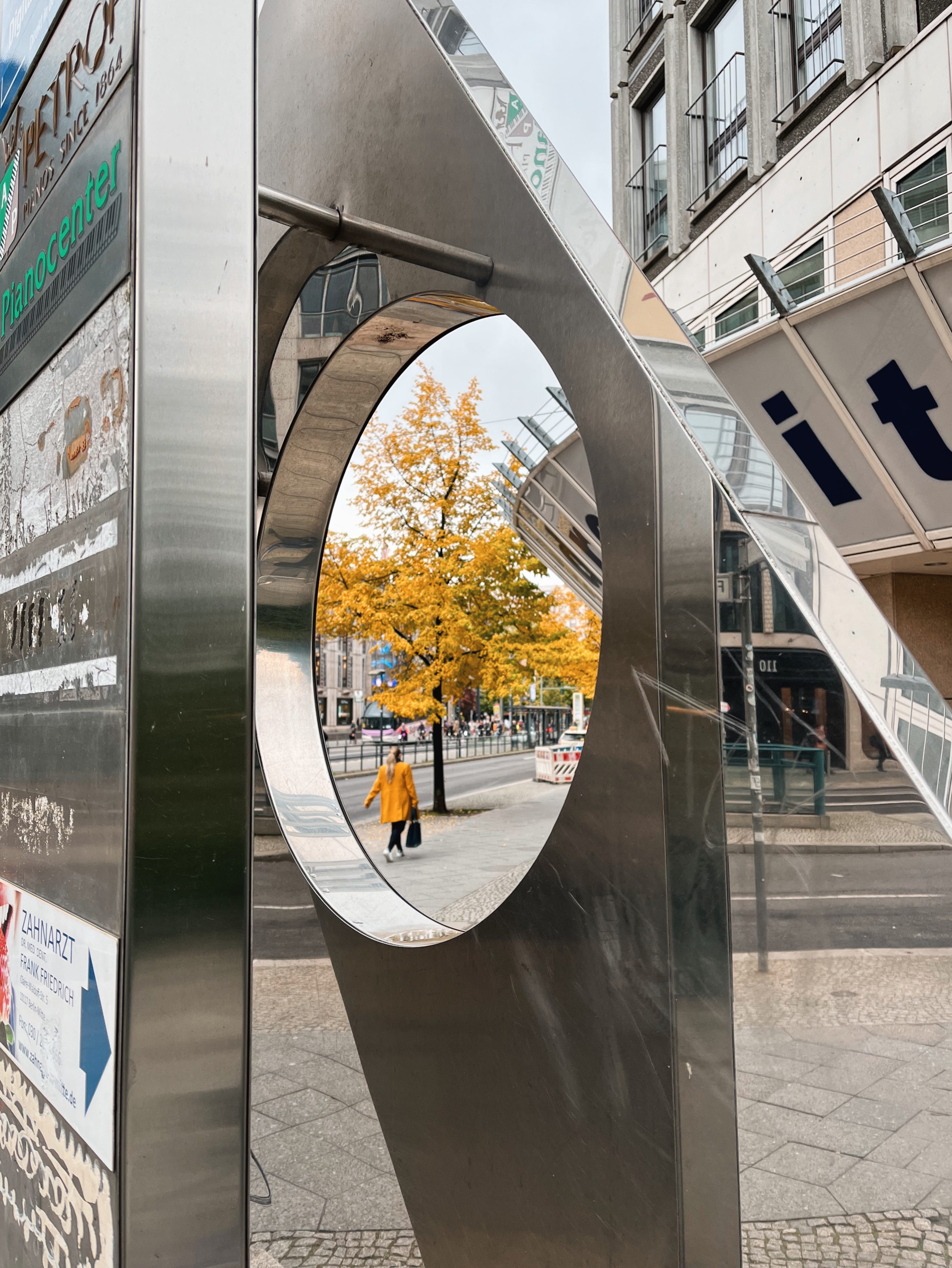
Visited Deutsche Oper because someone couldn’t make it and I was offered a ticket. Didn’t like the ballet but liked the building. Full of concrete and glass, it is massive and brutalist, reminding me of Moscow theaters I visited as a kid. There is a buffet, too. Everyone is in the queue for a drink. We are, too.
I am sharing an observation, deep in thought:
— If you say “oper” in Russian, it sounds like a well-known abbreviation of оперуполномоченный, a police detective.
Another person beams:
— And in my country, this would sound like a nanny. Au-pair!
December 6
Went to the presentation “Russian queers in Berlin in 18-21 centuries”.
A person is presenting the findings:
— Once, Georgy Chicherin went to Berlin… to improve his health… in order to be healed from homosexuality…
(laughs in the room. It’s an interesting choice of a city)
— …but in Berlin, he met Magnus Hirschfeld…
(more laughs in the room. Magnus was a well-known doctor, queer activist, and one of the most popular sexologists in the world)
— …after that, homosexuality was no longer a problem.
December 6
When foreigners complain about “cold, dark, icy Berlin”, I sometimes show them photos from St. Petersburg. There is also a video: after a snowstorm, the bus passengers had to exit and push from behind so the bus could break free from the snowdrifts.
Here are the snowdrifts taller than a person. Here are the parked cars, difficult to recognize under dozens of centimeters of snow. Here are icicles on the roof.
A French acquaintance:
— They are actually pretty.
I answer:
— I never thought of it like this. They are actually a mortal danger. When the thaw comes for a couple of days, they will fall, and some of them land accidentally on someone’s head. Icicles actually kill people during winter.
A French acquaintance:
— What do you mean by “kill”?
December 19
At work, I am hearing the same strange question for the second year.
— But do you also go back to your country for Christmas to see your family?
I mean, I understand the logic. Nearly everyone goes. People from France and Italy, as well as people from other parts of Germany, always travel for Catholic Christmas. Even people who initially came here from far away usually travel back once or twice a year, be it Brazil or India.
I don’t know where to start explaining. Do I start with family I don’t have? With Christmas I never celebrated, neither Catholic nor Orthodox, because I’m not religious? With traveling back that I cannot do, as well as travel back in time?
A friend asked:
— Will you feel lonely on 24th December?
The same level of lonely as on 23th or 25th, I wanted to answer, and then realized that they meant Christmas Eve.
There is something isolating about the thought that most immigrants actually have somewhere and someone to visit and could safely do so. Not about being alone on 24th.
But there are other people who cannot go, either. Conversations with the immigrants from Iran flow easily. Awful news, survivor’s guilt, inability to visit, pain in the heart for political prisoners.
— Imagine, I need to make two connections to get home this year; how annoying is that? — a European complains.
I don’t have enough imagination.
December 28
The questions that I got in Berlin from people from different countries and cultures that I cannot answer without additional research and a resulting 2-hour PowerPoint presentation:
Do you think that when Tsar Nicholas II was murdered, it was bad because he was actually a nice person?
How could it be that school holidays last for 3 months, from June to August, everywhere in Russia? Here in Germany, they last 6 weeks and start at different times across the country to allow people to travel without crowds. How should parents manage 3 months? Okay, yes, if they can bring them to the grandparents, it is nice, of course. But grandparents probably have their own lives and aren’t always free?
How do you mean, Koryo-saram are ethnically Korean but at the same time, from the Soviet Union? How was Korean carrot salad invented in the USSR, not in Korea? Why haven’t I ever heard about this big Soviet rock star who was actually a Korean? I thought only ethnic Russians live in Russia?
Why did you travel from St. Petersburg to Finland to buy Fairy dish soap if it is also sold locally? How could it be that people travel to another country to buy a better-produced dish soap? I don’t understand the connection to trust in institutions and governing power.
You’ve said that in many Russian Telegram channels with cultural announcements in Berlin, it was announced that on Totensonntag, the Baumschulenweg crematorium will host a day of open doors. But what I don’t get is why people were so interested? Yeah, okay, free entrance, events for kids, and classical music. But still, won’t you rather go for a hike?
Why cannot you just go to Dublin for a weekend? What do you mean, you need a visa? But you’re already legally in Europe. Well, maybe we could go to London instead? Also a visa?
Thank you for reading 🫶🏻
I am happy to hear your thoughts — in a comment or email.
Continue reading:
Arriving: Year 3

Below is the next batch of my emigration diary entries, translated and illustrated with my photos of Berlin from the corresponding year. Two previous batches: 2022 and 2023.
❤️❤️❤️
What was/is your journey to write like this? You inspire me to start writing notes like this too!