
Arriving: Year 1
Berlin diary entries from 2022, translated
One reason I like writing things down so much is that I can reread them later.
It's hard for me to remember the past instantly, or imagine the future, for that matter. I have aphantasia, which means I can't visualize anything.
But when I dive into my notes, I instantly fall into my past. Like a forgotten smell of a special dish, my writing always ignites a strong emotional memory. My diary is a time machine.
It’s been four years. I'd like to show you how my years of emigration went. Here is the beginning of my anchoring chronicles. Be prepared: the first year was rough.
July 20, 2022
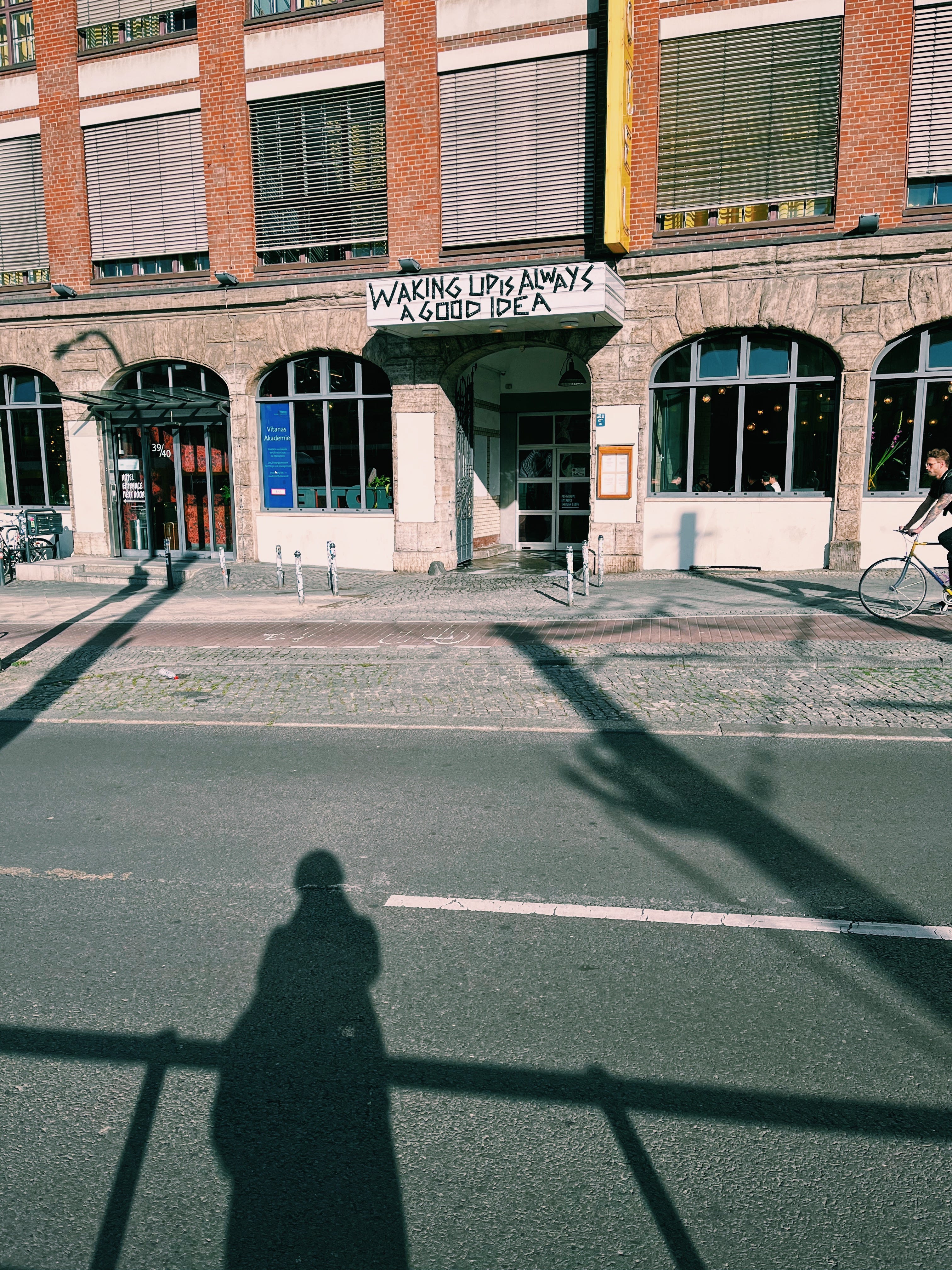
Was complaining to my friend V. that I had already arrived but had no energy to complete any of the open tasks on my burning to-do list. V. emigrated several years ago. Her teasing answer sobered me, and I chuckled with exhaustion.
— Just listen to yourself… “Today I just moved to another country. Otherwise, I am completely useless and am not doing anything.” What do you expect from yourself? Moving to TWO countries per day?
August 7
I already started my current job remotely in May, but it took three never-ending months to finalize all the documents and arrive in Berlin. So I kind of knew all my future colleagues, but only from the waist up, through a Zoom window. Once I’d arrived, I had to introduce myself again in the office, full-bodied.
It didn’t go smoothly. Small talk questions are a pain. Zoom spared me the spontaneous meetings in the kitchen, and I thought I communicated well in English.
I mean, who doesn’t know that Russians cannot do small talk? I did, for one. But even though I knew what the wrong answer was, I couldn’t guess the right one. I tried this and that.
— How have you been lately?
In the last two weeks, I learned to pause (instead of my usual enthusiastic info-dumping) and ask a clarifying question: “Do you want a short version or a long version?”
After two weeks, I knew no one had ever chosen the long version (see other cultural shock points in a separate post). But my short version didn’t work either.
The kind, not detailed, small-talk level answer was:
— Better!
What I meant by it was:
Well, I am absofuckinglutely overwhelmed by the experience of late-in-life emigration alone to the country I never planned to live in. Apart from not knowing the local language, I am working in English for the first time in my life. There are no family or friends I could rely on locally here, so I need to find people, but I have no capacity to do so. I’m still in the middle of processing the loss of my previous life and the everyday horrors of war, of the wars. I am scared to read the news, and back home, queer people, migrants, and other minorities are hit hard daily with new laws and raids. Tension and inflation everywhere. Of course, I am at the same time very grateful that, after 53 job interviews in two months, there was a company that believed in me despite my having no international experience and having worked only in local markets. I am also completely buried under a mountain of paperwork required of me to legally stay here; everything is in German, and I don’t even have an EU bank account yet. All of my bank cards stopped working because VISA and Mastercard decided to make a political move, together with PayPal and others, which I understand but in order to get a salary, I kind of need to open a bank account, and at the bank branch I went to they said, until your country stops behaving like this, we won’t be able to help you, so I went to another one, and another one, and then I found a person who agreed, and other emigrants are doing the same, it’s a numbers game, like job interviews, you get a certain experience and you learn from it, and you persevere because there are no other ways. My therapist is going on an educational leave for a month, we’ve seen each other only back home, beginning of July, and I am not sure how I’ll manage without her. How am I actually managing now? Not too well, maybe I should try an English-language mental health service they offer at work, but I cannot really estimate if it’ll take more energy than it’ll give me, but probably I should try and hope for the best, because in general I have already a certain feeling that I don’t exist anymore and I don’t know who I am, so I probably need mental health support, but in earnest, since last time we’d bumped into each other in the office kitchen, I solved a couple of practical topics, I am steadily moving on, so I would say compared to last time, today I feel BETTER.
— Better! — I shortly report to the colleague with a crooked smile.
A colleague, trying to decipher my message, asks:
— So you were sick, and now you’re getting better, right?
Yeah. Something like that.
August 10
Question I had asked last week:
Is “How are you?” a real question or just a social sniffing in Germany? How does it change depending on the context you meet in?
Can you flush toilet paper down the public toilet, or is it like in St. Petersburg, where the pipes are too old and fragile, so it’s better to put everything in a bin to avoid clogging? Yeah, sometimes there is advice from the venue, but what to do in case there isn’t?
Is mail delivered on Saturdays, if it’s not delivered on Sundays?
If there is a note attached to a letter from the bank saying something like, “do not just throw this PIN code paper away; destroy it with gusto, first separate plastic from paper, and then delightfully shred it all, ideally eat the paper afterward, so no one could recover what your PIN once was,” is it a recommendation I can safely ignore or a serious thing people really do?
August 17
I moved to Berlin four weeks ago, on the hottest day of July.
It sounds so unnatural. Who moved to Berlin, again? Me? Doesn’t sound like a thing I would do. How long does it take me to believe that I really got the job, got the documents, got the visa, crossed the country border, then another one, and no one stopped me, no one denied me what I was entitled to?
I am so used to people and institutions in power taking random grabs, creating hurdles without any logical reason, finding faults where there were none… so even now, I didn’t — and don’t — allow myself to believe it’s true. What if it isn’t? What if they (who are they? There always were “they” before, if not this power-hungry institution, then that one) take these privileges from me? It’s better not to believe now, not to trust right away. If I believe and then it’s suddenly gone, I don’t think I can take it.
This is what I am used to in my 37 years: uncertainty, chaos, lawlessness, fear, bespredel (unending violence without limits). I haven’t lived in a calm world. If it wasn’t a political catastrophe, it was economic, starting from the 90s.
How long does it take to get used to a softer place? Am I already too old for such an adjustment?
M., who is moving to Berlin soon, too, brought a thought from their therapist that we all have two major traumas: being born in Russia and having grown up in Russia. Their therapist considers it to be a huge undertaking to work through this CPTSD, maybe during the whole life that is left. Good luck to us, I guess.
Will Berlin become my home without quotation marks, where I’ll fit and belong? No idea. And if not, should I move somewhere else, again, and try once more? If I have energy, probably yes. It’s difficult to remember how I felt when I had energy last time. It was probably before the pandemic.
I moved to Berlin (difficult to write this, as I don’t yet fully believe it) four weeks ago to try and see if there is a place to live safely. Maybe not; maybe it’s a tall order in the 2020s in general. But I wanted to give myself a chance; it’s better to try and complain than complain that you didn’t try. So here we are.
August 17
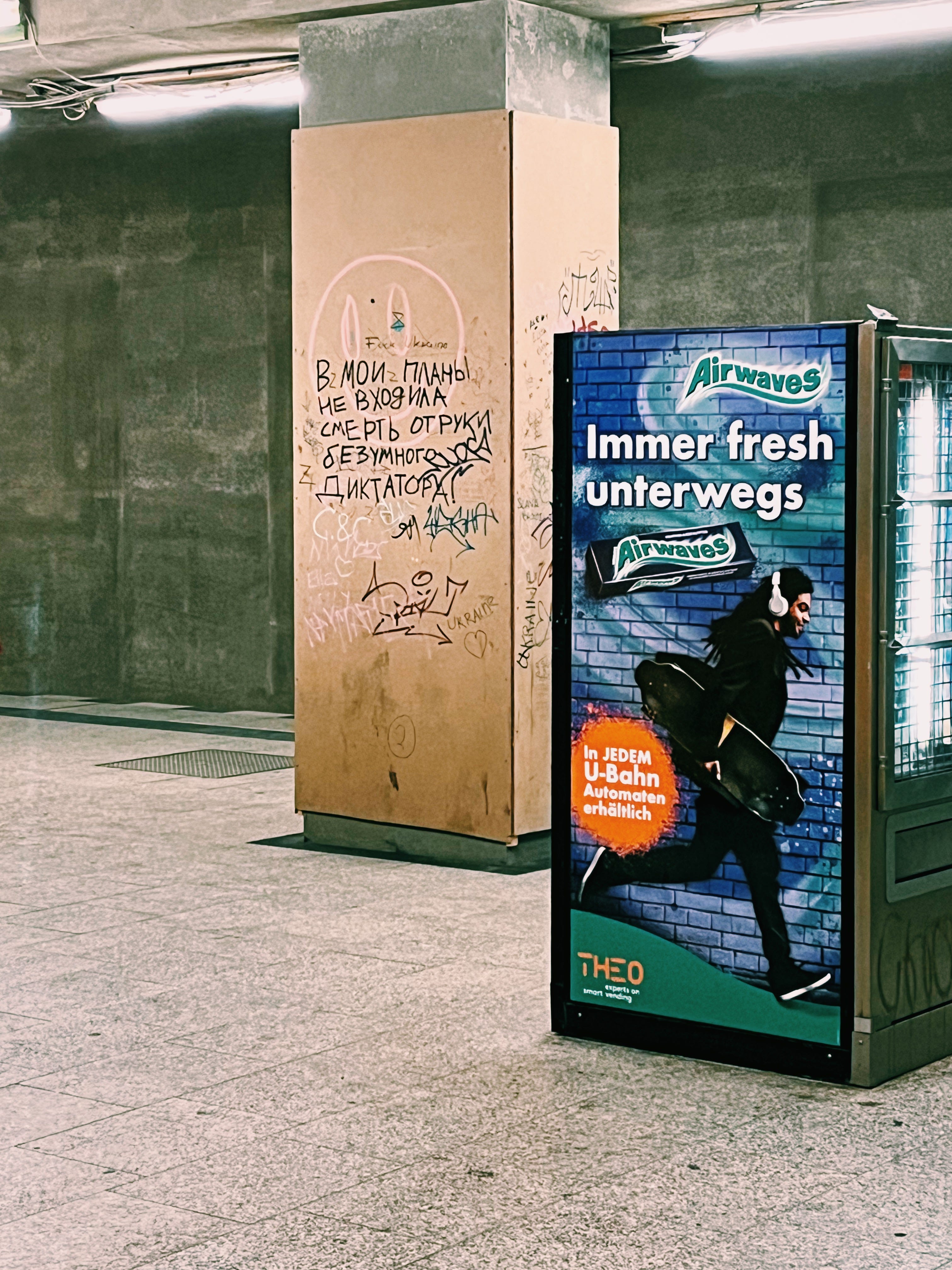
Was complaining to V. again that, even though I eventually managed to pay for my Evernote account again, the thing I really need daily and lost earlier this year, I still don't feel efficient enough because it took, and I quote, “too much time.”
V. made me write a list of everything that preceded the happy moment of paying for Evernote.
Here it is.
I found a job, applied for education recognition, got the paperwork in the mail, gathered loads of documents, had them translated into German with the help of an agency, registered for insurance from the start-work date, and bought travel insurance for a couple of days in between. Bought two suitcases, found two new families for two traumatized stray cats I didn’t trust myself to bring to the new country without any safety net, etc, etc.
I found an apartment hotel (after mailing dozens of them) that offered Anmeldung AND had a room in the required timeframe.
The hotel was cashless and asked for an advance payment to secure my room. My cards stopped working abroad. I found someone who had a card accepted in Europe and paid for me.
I arrived in Berlin via bus and then plane.
I got my first Anmeldung (no SIM card, library card, or bank account was available otherwise).
I found a bank that agreed to process my salary (after a few attempts) and got an appointment in a week.
I installed two apps: the bank app and the authorization app, and connected them to each other.
I was patient until the card arrived in the mail a few weeks later.
The PIN code arrived in a separate email. I thought about whether to eat the PIN code paper for security reasons.
I took the subway to the ATM at the self-service branch office to put some money on my new card (my salary was still expected way later).
I created an account for the German app store on my phone.
I created a German PayPal account.
I found someone who explained to me how to connect the EC-card (that doesn’t have a number on it, as a usual VISA would) to PayPal.
I chose one of the connection variants, not really being sure about the consequences or the differences between them (SEPA, etc.).
One Eurocent was sent from PayPal to my card, with the PIN code in the comment field.
I waited a day or two before my bank app showed the required transaction, then entered it into PayPal.
And only after all this did I “eventually” pay for Evernote.
(Russian Evernote accounts were cut from premium access in February, like other services, so without a card from another country, I wouldn’t be able to reinstate it)
Now I can walk around without my laptop and without the fear that I’ll urgently need some documents or notes and won't be able to access them.
But V. is right that it was a process.
August 27
Me, six months ago:
— I don’t really understand why emigrants listen to Russian music. Why do they feel nostalgic? I don’t listen to music in Russian now, so I won’t if I move abroad. That’s not who I am!
Now, after a full day of work in English, entering the loud supermarket in noise-canceling headphones, turning on a melancholic pop song from my childhood:
— Ahhh, now I think I get it.
Полчаса поезда под откос, полчаса не твоя полоса…
Difficult to say why this song is especially soothing now. Is it the simple, tender melody that reminds me of the simpler days when I was younger and didn’t grasp the intensity of the world yet? Is it T.A.T.U. childish voices that were at the same time queer-bating and queer-approving for me at 16, familiar and daring? Is it the presence of my first language, or the absence of English or German, that constantly cognitively challenges me here? One thing I know for sure: this song would never have soothed me back in St. Petersburg.
Coping mechanisms depend on the context.
I was reading about foreign queers every day in Russia. Here, I find myself watching a documentary about Alla Pugacheva, a famous Soviet singer I was never interested in before.
We sprinkle what is missing on top of the main dish, and then we become whole.
September 20
Met two great women at the tech conference.
One was born in the Philippines, studied in the US, and has been in Berlin for 5 years. Another was born in the Dominican Republic, lived in Belgium, now lives here, but plans to move to Spain because she feels people in Germany are not warm enough.
— The first six months were the hardest for me, — shares the first one after having listened to my whining.
— But did you cry in the evenings? — I inquire. Many people write online that it’s part of the immigrant package, but I need to hear it from a real person who’s made it, is successful now, and shines as if it’s always been easy.
— Yes.
September 26
Had seen a friend yesterday. She confessed she doesn’t watch the news. Asked me to explain “in a nutshell,” and I did my best to keep it short, but it still took more than an hour and left me drained afterward. It’s tough, trying to explain in English what I had only discussed or read in Russian before. I struggle to find the right words. In Russian, I would use a lot of swear words, too. Here, people don’t do that, and I feel uncultured when I do.
My Russian emigrant friends mostly drink to cope, to continue showing up at work to be able to secure their stay abroad. No one discusses this emotional abyss between what is discussed at work (“How was your vacation in Italy? Did you enjoy the food?”) and what is discussed in the anti-war chats, directly, painfully, meaningfully. No one is interested in your white-collar work how politics split your family in half.
I asked my therapist during our last call if she thinks it’s normal that I am abroad, safer here, but it is she who helps me, not vice versa. She said yes. I think I have “survivor's guilt.”
I am trying hard to dissect the porridge that resides in my head instead of a functional brain...
🌀 Here is the current news layer with all the unfairness and suffering.
🌀 Here are my thoughts about people I know and care about.
🌀 Here are overflowing Telegram emigrant chats with their thousands of messages per day, where I need to stay for now, because I too have questions about documents and Germany, and there are volunteers answering them. But it is overwhelming and anxiety-ridden. Some people in these chats are in despair and looking into any means of emigration, even the worst ones. It’s robbing me of the energy, too.
🌀 Here is the layer of emigrant identity loss (or recalibration) and life in another country alone for the first time.
🌀 Here is the layer of speaking English daily for the first time in life, socially and professionally.
🌀 Here is the layer of learning German and trying to understand what “der Zug fällt aus” means and what variants do I have as a result.
🌀 Here is the work layer where I face difficulties, disappointment from others, and try my best despite having cultural clashes and no clear feedback.
🌀 Here is the bureaucratic layer where I cannot submit my residency documents because I need two more papers.
🌀 Here is the to-do list layer: for example, it’s getting colder, and I arrived with 1.5 suitcases of light clothes, hoping to solve this later. Also, my winter clothes from St. Petersburg do not fit this climate.
🌀 Here are the recurring payments I need to make on time, and it’s my own fault if I have made an error. There is no safety net, and the risks of misunderstanding are high.
🌀 Here is the layer of required education. I only worked in Russian before, with different platforms, so I need to learn the terminology, study the tools and services we use, and prove I am as qualified as I presented myself during the interview.
🌀 Here is the layer of required socialization because online is not enough to produce the hormones that make me feel safe and satisfied to keep doing all the other things.
🌀 Here is the layer of online, because local people I meet do not understand some things or do not know me long enough, so I also need to connect with people who do.
🌀 Here is the layer of therapy that is needed, but also requires me to be vulnerable and work through things, which takes energy, too.
🌀 Here is the layer of sport and massage that is needed for my body to keep going.
🌀 Here is the layer of eating and sleeping well, the foundation of everything else.
🌀 Here is the layer of feeling that I never do enough and should have done more and better, the usual pitfall I fall into when it’s hard.
🌀 Here is the layer of existentiality that is always with me.
— Keep up the good vibes, — a colleague writes, trying to cheer me up.
Did I have any to begin with?
September 28
— Yes! That’s exactly what I want! — one woman tells another in English enthusiastically on a loud street in Berlin. It sounds like she is agreeing to do something together.
— But I don’t have energy for this, — admits another one, and I can relate.
September 30
I want to write down that today, after two months in a new city, I found myself walking past a supermarket.
A supermarket was open (!), I wasn’t already loaded with things and purchases like a donkey (!), BUT I didn’t need ANYTHING urgently that day. It was a first.
I already adjusted to keeping a shopping list for all types of stores, and I now have a working system that keeps me fed even on Sundays when supermarkets are closed.
This is how progress looks like.
October 1
— What about this jacket, — I ask an employee in a sports store in English, — is it water-resistant, you think?
He looks at me with confusion, finds a label (that is in English), and reads aloud:
— Water-resistant. Windproof.
And he is right, I can also read it, but my question is wider. Maybe I just cannot express myself well enough, or maybe this is not the best space to share what I’m holding, but I need to discuss this with someone, and I don’t have anyone who would share the load. I am now the weird, lonely person bugging strangers in public spaces.
I have a practical point, though. I am not sure whether this or that jacket is too cold or too warm for the typical weather here. I know a lot about the climate of Moscow or St. Petersburg, but here, I am lost without new inputs: temperatures, wind, humidity. Do I need two jackets, one for autumn, one for winter? Three? One? Which features to look for? I asked around, but I got nothing substantial to work with, and the jackets from the brand I like are 600 euros, which is not in my budget. Even in this store, everything is at least 200 euros. It’s not only about the price; I hate buying things I won’t use. I want to buy something I enjoy wearing and that I can care for.
But my question is not only about how a certain jacket fits the climate; it’s also about what I find comfortable. I’ve spent 15 years in a place where black ice stays on the streets from October to March, sometimes longer. My understanding of autumn is probably twisted, looking from Berlin. I need to adjust it, but no one knows how. Not me and not the employee.
— Water-resistant. Windproof.
He repeats and looks at me. I am a white lady over 30 who can afford a 200 euro jacket. Am I joking, asking specifically dumb questions because I have nothing else to do on a Saturday evening? He doesn’t know I’ve spent the whole day in the German class and my brain is fried.
I try to clarify the question:
— Do you think water and wind are typical for autumn and winter in Berlin?
He is even more confused now.
— Yes?
I finally explain that I am looking for something to shelter me from my first winter in Berlin. We both smile; the tension is gone. He cannot help, but he can understand me. Or so he thinks, because he mentions that Berlin winters are “quite cold and dark.”
This winter might actually turn out to be mild and warm for me. But I can feel they are more watery and windy than I’m used to.
I buy the jacket.
October 8
Today in German class, we discussed the topic of family.
A question we needed to answer in German: who among your relatives you would invite to your birthday party.
I had to re-read three times to understand what they wanted from me. Where I come from, relatives are not welcome at birthday parties. Most people are estranged, and if they are not, spending time with family is hell. Different political leanings, passive aggression, no boundaries allowed, unwelcome reproductive pressure, and complaining about the “child” (who is over 30 or 40) not listening to the “advice” of the elders (which is usually a political opinion or a demand).
My entrepreneurial friend has had a thriving business for years. Her relatives keep pushing her to “get a steady, even if a badly paid, government job instead”. It’s what they learned to do in the USSR. It’s what was safe. And they never let go. This is the main topic of all their conversations.
Male relatives would flirt with your friends, drink too much, and sleep in a Russian salad. Why would you want this on your birthday?
So I answered: no one.
Every other student was looking at me weirdly. Apparently, by voicing the most usual thing to me, I announced that I am very unusual here.
Then, another question came: write down three names of your relatives, and other students should guess how you are related to them.
Again, in theory, I understand the logic. It’s not personal. We just needed to practice words like aunt, mother-in-law, and nephew. I just didn’t have the material. No aunt, mother-in-law, or even siblings. Badly prepared for the lesson.
I could see that even though we all, apart from the white German teacher, were immigrants, I didn’t fit in here. But it wasn’t the first time in my life.
I raised my hand again, prepared for the stares.
— Am I allowed to offer dead people? Otherwise, I won’t have three.
October 20
Today is my 3-month Berlin anniversary.
Where would I have liked to be at this point? Let’s see what I have expected of myself.
I imagined that after 3 months in my new city, I would already:
get along nicely with my new colleagues, everyone thinks I’m a cool person to work with,
manage all my tasks, at work and in personal life, because I am very organized,
found some interesting and independent friends who are exactly the people I was missing in St. Petersburg,
know the city as the back of my hand, maneuver knowingly in the public transport, found favorite cafes and restaurants,
learned German at least on a basic level and am able to communicate when needed,
finally got the desired “work-life balance” that people arrive in Germany for,
and sorted all the documents early on to obtain a plastic work permit rather than just a visa sticker on the passport.
Each of these points does look like me. When I’m not overwhelmed, this is what I expect of myself because I usually deliver. But gathered together, on top of overwhelm, it’s a workload for seven people. And some parts, like the speed of processing the work permit, do not depend only on my frenetic efficiency.
I guess I am learning how to be patient instead.
It was not very transparent back in St. Petersburg how difficult all these would be or how long it would take. Maybe it’s a good thing. I often underestimate the time needed, so I enter processes with hopes of finishing quickly, with a lot of energy. If I knew, maybe I’d not enter at all, already disheartened. Some healthy amount of delusion is useful.
What is done in reality by now?
I was lucky to get the apartment in the area I like. Too expensive, no balcony, no elevator — I should’ve moved 10 years ago to have it differently. Oh well. Still, I have somewhere to live, it’s cozy there, and the bed is good.
I started attending German classes. Because of my workweek overload, I am going on Saturdays from 10am to 4pm, with one 25-min break for Döner. Our teacher calls it a “crash course”, and it feels like it crashes sometimes. I aim to reach only the A1.2 level by the end of this year, and I can’t speak at all. But I am proud to have started.
I work with two therapists: my Russian-speaking therapist is back, and I’m still in contact with the English-speaking one (because my main therapist has no context for emigration, whereas the second is herself an immigrant, which is especially helpful now). I can break down and cry safely twice a week.
No favorite cafes or restaurants yet, but I hate Döner after having it every Saturday during the break. I can be proud that I learned where the supermarkets are and what each specializes in.
I understand the difference between U-Bahn and S-Bahn. I haven’t mastered riding the bus yet. They either never arrive at the bus stop, or the stop isn’t where the map shows it should be. People recommend alternative maps, but they are in German, which confuses me even more.
I am used to speaking English every day at work and after work.
I am not fired yet, with some months left before the probation is done.
A colleague of mine failed the probation period because the team didn’t like him. This speaks to my illusion of everyone liking me if I’m trying my best. Nope, work is also politics, whether I like it or not.
What isn’t done:
Work permit: I didn’t even manage to apply for it. With a sprinkle of magic and support of intermediaries, I got an appointment, but only for November. After that, it’ll take a few weeks to a few months to get the plastic card. The processes are excruciatingly slow and not transparent at all, but at least they exist.
Queer community: still nothing. No close friends or friendly groups found. I feel extremely lonely, and being present at Pride events with everyone cheering, hugging, and kissing was not very warm. Some events and networking that I’ve been to attracted nice people, but they were already at capacity socially (partner, family, friends…) and not queer.
No time to read or do anything else apart from keeping myself functional and covering the needs. I didn’t have one weekend without a burning to-do I needed to cover, or I would suffer in one way or another.
I think the bigger picture is that I don’t have a basic safety circle (so far) — people who I can relax with, who are happy to see me, who I don’t have to perform to impress. That is luxury I’d lost. Not even because of emigration. The friend circle I’ve been building in St. Petersburg for years dissolved in February. People moved everywhere at once, and even if I hadn’t left, my close circle wouldn't be there anymore.
November 8
Today in German class, we had another question to answer: what would you have cooked for your friends? (to use words that describe food)
I have already announced in this group that I don’t enjoy cooking, so they don’t expect any delicacies coming from me. But you know what? I learned (because of the questions in the book we practiced speaking with) that I have other survival skills that others lack: swimming and skiing. When some people played cricket at school, I skied in the neighborhood park. We’ll see what is more useful in the apocalyptic future!
A student reports that she would cook satay with rice. Whoa!! I love a good satay.
It’s my turn, and I am again trying to be honest, but it looks like I’m goofing off. It looks like I misunderstood the exercise. But I am answering the question literally and honestly.
I could easily cook anxiety for my friends.
I am good at preparing different scenarios of how everything could go wrong.
I am always happy to share some childhood traumas.
December 22
When I think about current news, I feel a little envy for people who are already dead, so they don’t have to accept what is happening again and again.
As they say, “We thought we'd already hit rock bottom, but then we heard knocking from below.”
December 28
The year is rolling to the end, and in the restaurant, I got a fortune cookie. I think it’s a queer one. But maybe it’s also an emigrant one.
You were not born to act the way others want you to.
Thank you for reading 🫶🏻
I am happy to hear your thoughts — in a comment or email.
Thank you so much for sharing 🫶
That was heartwarming, devastating and hilarious - all at the same time.
I simply don’t know how you did all this, Lena, and having met you, albeit only briefly, I can say without any reservation that you most definitely have won!
A very inspiring read-thank you!
PS Is that saying about hearing knocking from below Russian? I’ve never heard it before, but you can bet I’m going to use it a lot from now on!