
To Be Read as an Alien
and its advantages
A friend emigrated to Berlin a month after me. Similar background (our queerness, same generation, we both love to write, and we grew up in the same city).
Lots of differences, too. But still, the similarities allow us to compare our emigration experiences.
This summer, after the first hectic years, reflecting on their experience abroad, they asked me whether I had experienced the “emigrant burnout” and, if so, how it went for me.
That’s my favorite mental exercise: questions.
But I was drawing a blank this time.

Maybe I didn’t understand well what “emigrant burnout” really is?
I asked DeepSeek to define it for me, hoping to get some inspiration by putting the concept against my own experience.
It all looked logical, but I didn’t feel any relevance, even though it was pretty rough during my first year.
DeepSeek says:
Emigrant burnout is not just being tired. It is a specific kind of exhaustion that comes from the relentless, low-grade, never-ending demands of functioning in a foreign system.
Core Features of Emigrant Burnout:
Decision fatigue
Every small task requires double the cognitive load: finding the right word, understanding the form, navigating unfamiliar norms.Social depletion
You are constantly “on” — translating, code-switching, managing misunderstandings, performing competence in a non-native language.Grief without a timeline
The loss of your old life, your old ease, your old sense of belonging. This grief does not end. It just becomes background noise.Identity erosion
You were someone there. Here, you are a beginner, an outsider, a person with an accent. That gap wears you down over years.Institutional friction
Bureaucracy, healthcare, banking, housing — every interaction is a fight or a puzzle. There is no “automatic” anything.Burnout happens when the cost of adapting exceeds your available resources for a long period of time. And emigrants often have fewer resources: no family nearby, no old friends, no cultural shortcuts, no history of “how things work.”
Well, I didn’t have old friends before emigration, too. I lost a lot of old friends after I discovered feminism, or when I came out, or when I moved to another city. Most of my friends were quite new, many of them not queer, and some of them already emigrated.
I had no supportive family, either. No queer circle that I’d felt safe and fully seen in. No partner or siblings. “The loss of your old life, your old ease, your old sense of belonging” — which belonging, actually? One working connection I had was with the city, and I’m still grieving that one. Another was with my cats, but I know it was better for them to move on, too. The closest friends I had, I still have contact with, wherever we all landed on the Earth.
And although I eventually figured out “how things worked” back there… a lot of “how” or “why”, a lot of traditional and/or societal things didn’t make sense for me at all. I still needed to remember I’m different and working on keeping a steady identity while performing as a normie to look less weird and get fewer problems.
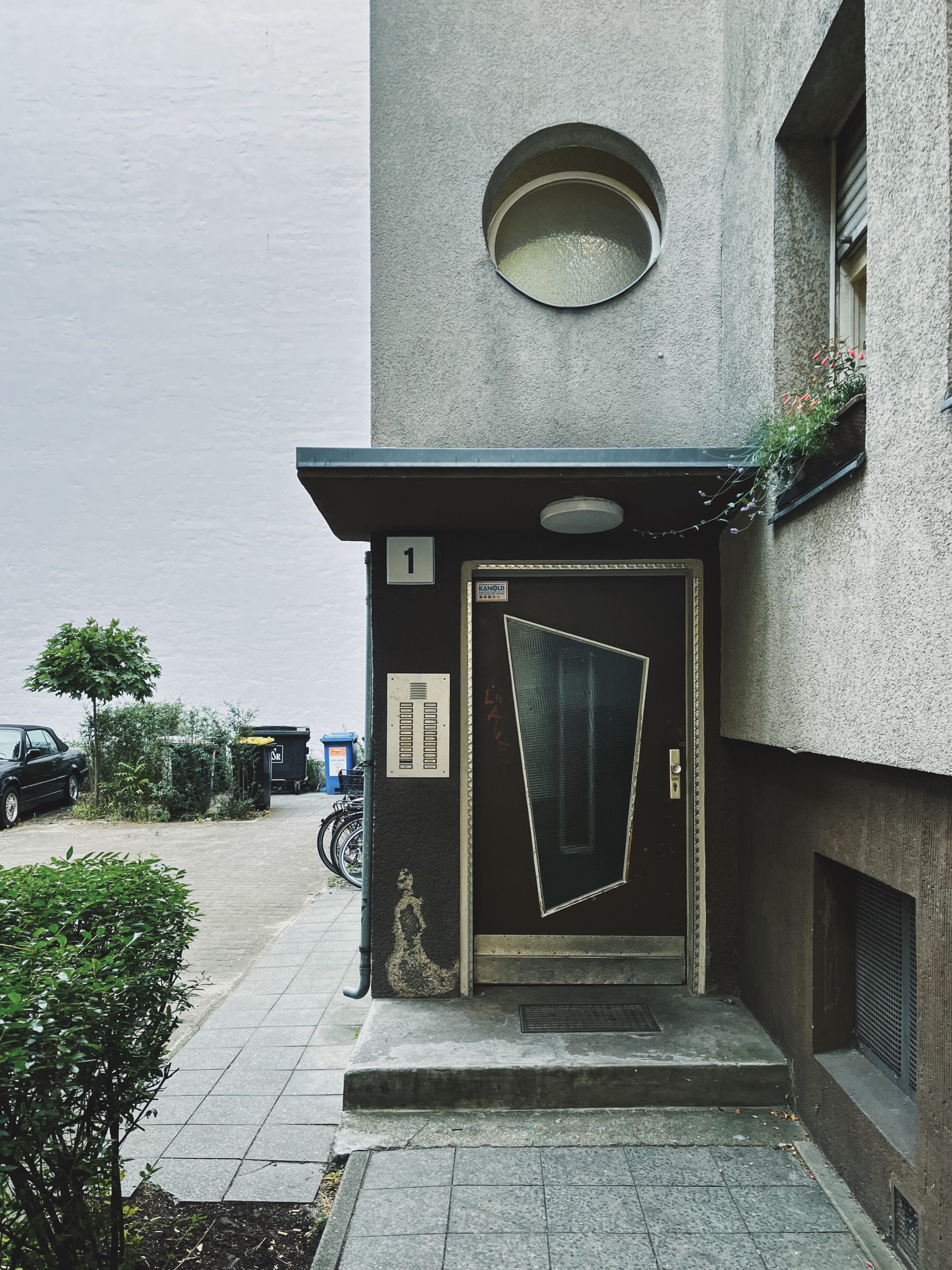
Back home, I was an outsider in many ways: not enough money, not cool enough, not on the expected gendered path. Not fitting in. I felt like a foreigner for many reasons, queerness as the most obvious one, but not only that. And foreigners, real foreigners, had nothing to do with me.
Is it really surprising that in the new place, where I am inherently different, but where a lot of other people are as different in their own ways, I don’t feel worse? I mean, of course, emigration was and is rough, but living in my home country was, too. Life is pain, as the Russian saying goes.
Here, I have at least one good reason for being different. The reason everyone accepts. The reason everyone thinks of way before I explain anything. Even if it’s not a real reason for a given difficulty.
I am very direct with my answers because it’s part of my first culture.
I understand things literally because it’s not my first language.
I cannot smile with my teeth because in my culture we say, “smiling without a reason is the sign of being stupid.”
It’s easier for me to work with the written document than to listen, because we are a very text-based culture.
I don’t celebrate this holiday because my year was always structured differently.
It’s not resting bitch face; I am just Slavic.
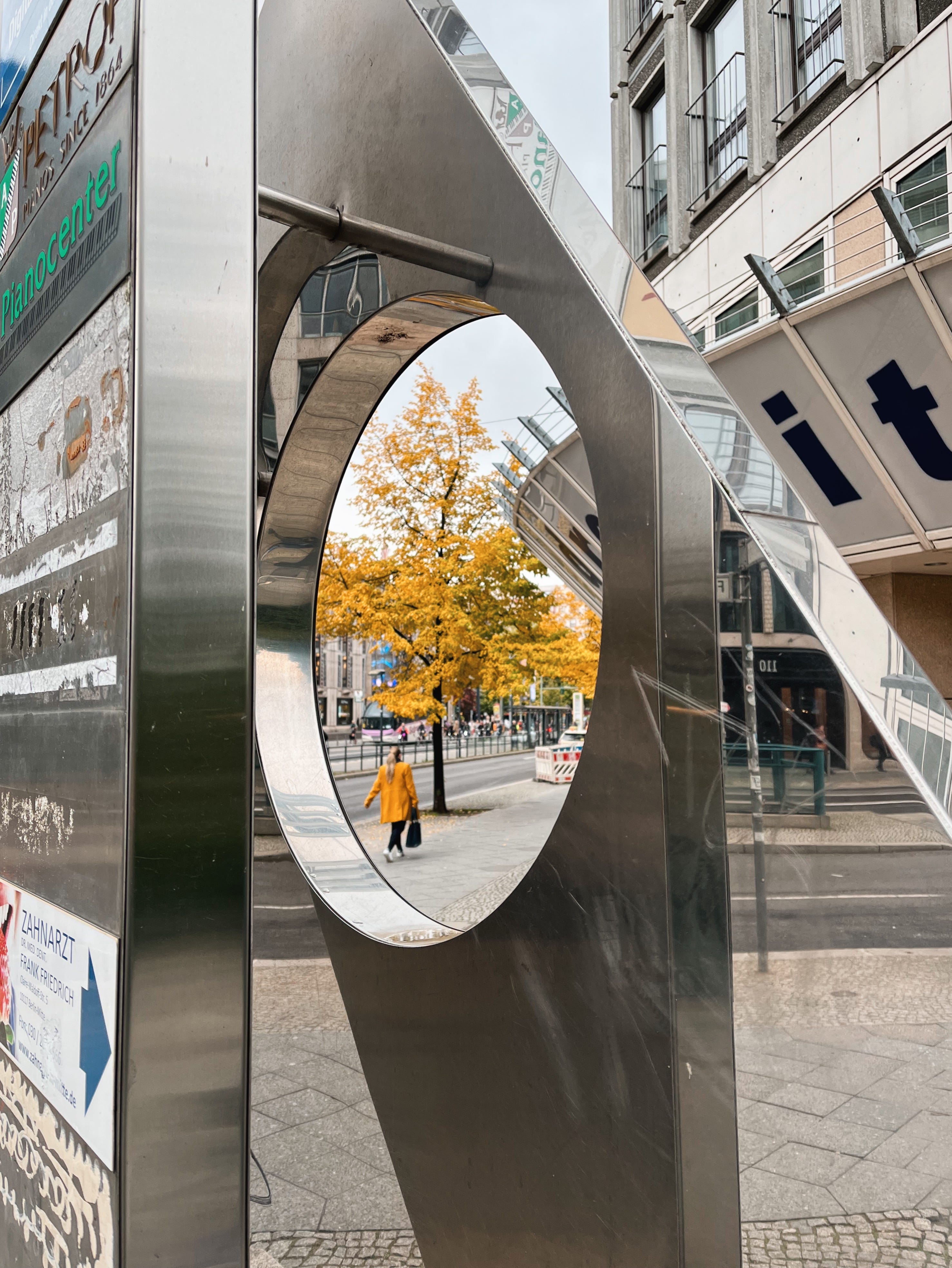
Rationalization is a creative tool. Our brains like to find answers. If you’re set to find a logical explanation, you’ll get one. Whether it’s the correct, the only, or the most relevant one is another question.
But the logical explanation removes ambiguity. Ambiguity is a barrier. “Are you then a man or a woman?!” — I heard drunk men slur to me in my home country. It wasn’t their business, but they couldn’t not ask. Ambiguity is not for the faint-hearted.
Sitting with discomfort is a hard skill to learn. Many didn’t.
The logical, obvious explanation removes the gap between expectations and reality. It supplies the reason. Even if it simplifies or stereotypes.
There is no question of “what is wrong with you” anymore, or “who do you think you are”.
People around me think they know why and who I am.
But I did not become “weird” when I emigrated. I was always weird. In the end, everyone is — no one is “normal.”
Normal is an idea, not a living, breathing person. We are all imperfect humans, each in our own way. Diversity is beneficial for evolution.
But the brain wanders. We love to compare. Categorizing is how we make sense of the world. It’s us assigning meaning.
We can learn to assign better categories, to wait for consent, to judge less, but we cannot skip the sorting altogether.
One of my favorite TV series is Resident Alien. I found attempts to understand humans really relatable — I feel this way repeatedly, as every neurodivergent person probably does. There was also PQ, a 2014 movie that gave me a similar feeling of being seen.
Some social rules don’t make any sense, people do some things on autopilot without thinking, and some phrases we use are pretty weird if we think about them long enough. So when the protagonist of Resident Alien, Harry Vanderspeigle, arrives on Earth without any understanding of what people are like, I see myself in him when he misinterprets something — both after emigration and before.
A person said to me, “I like your T-shirt.”
“Okay,” I answered politely. It felt like an opening, but I had no idea for what. It was a simple, white T-shirt, nothing too fashionable. I waited for a clarifying phrase, but it never came.
Were they hinting they need the same T-shirt and I need to explain how to buy it? But they didn’t ask for it. I was confused.
At home, I thought about it more. There was a music band’s name on the T-shirt. Could they mean, by saying “I like you T-shirt,” that they knew, or liked, the band? And if so, why wouldn’t they say so?
A couple of months later, it happened again. Someone else told me they liked my T-shirt.
Prepared for this, I asked if they know they band. They did. They looked happy to have mentioned it. I was ambivalent about our shared knowledge of the band, but happy to have learned how to react ‘correctly’.
Once people learn that Harry is an alien, they start explaining things to him and helping him become a functioning member of society. They laugh at his miscalculations with him now instead of distrusting him.
I think this is where I am now, rather than emigrant burnout.

Thank you for reading 🫶🏻
I am happy to hear your thoughts — in a comment or email.
Thought-provoking as usual. My "migrant burnout" in the Netherlands felt very different from what I experienced in Sweden, and in Milan I didn't experience migrant burnout at all.
I guess that in the Netherlands I was a "real" migrant, and my burnout came mainly from being expected to explain myself over and over again. I just wanted to be left alone and get on with my life. In Sweden, as an "expat", no one expected me to explain anything. You earn money, you spend it in this country, you pay your taxes... and no one bothers you. Or perhaps it's because I live in a bubble, so I'm somewhat immune. In Milan, I was more than a tourist but less than a resident, curious enough to explore, but also sheltered enough that no one expected me to do much of anything.
But about T-shirts... you just never know. :-)
Once at my local gym, I saw a guy wearing a T-shirt that said, in big letters on the front, "I WORK HERE," and on the back, "ASK ME ANYTHING." So I asked him about a machine I had no idea how to use.
He looked at me and said, "I don't know. I don't work here."
Then he just walked away.
And I was like... what just happened?
On top of everything you explain, I found "not being able to smile (or they'd think you're stupid)" sooo pressuring!