
Finding my center, again
My journey to a steady yoga practice and a feeling of belonging in Berlin
One of the happiest moments last year was in October when I was accepted at my current Iyengar yoga studio. I was washed over by a deep sense of belonging.
Iyengar yoga, the style I like best, is hyper-verbal. Every movement is focused on a specific group of muscles and explained in details.
In the past, I had a teacher who was previously a boxer, with a broken nose and a joyful personality. He taught me to never give up, even if it feels my body hates moving today. He taught me to try once and see how it feels.
I had a teacher who was a mathematician, quiet and direct. Thanks to his explanations, I finally got the logic behind “Keep one meter distance between your feet”. He showed us how to quickly measure the required length with the usual yoga belts.
I had a teacher who was a bridge construction engineer. She taught me how to build poses from the ground up based on solid footwork. She also explained what it means to stretch the spine and why we had ropes on the wall for support.
They all brought their strengths to Iyengar practice. They didn’t have to hide what they did before or in parallel. Their approach was grounded and real.
Before emigrating, I was coming to the Iyengar school 2-3 times a week.
Fans of other styles make jokes about Iyengar yoga. They say that by the time you set up all the props (for example: a chair, a bolster, two blankets, a couple of belts, several blocks, and perhaps a sandbag on top) to be ready to do the pose, half of the class has passed.
There is some truth to this. But I’ve never harmed myself during Iyengar yoga. At the same time, once I easily managed to pull the shoulder at Yin Yoga lesson because the teacher didn’t care if any of the students were doing the pose correctly. It took a year and a half to recover, and I’ve learned my lesson.
Then, after I emigrated to Berlin, I learned another one.
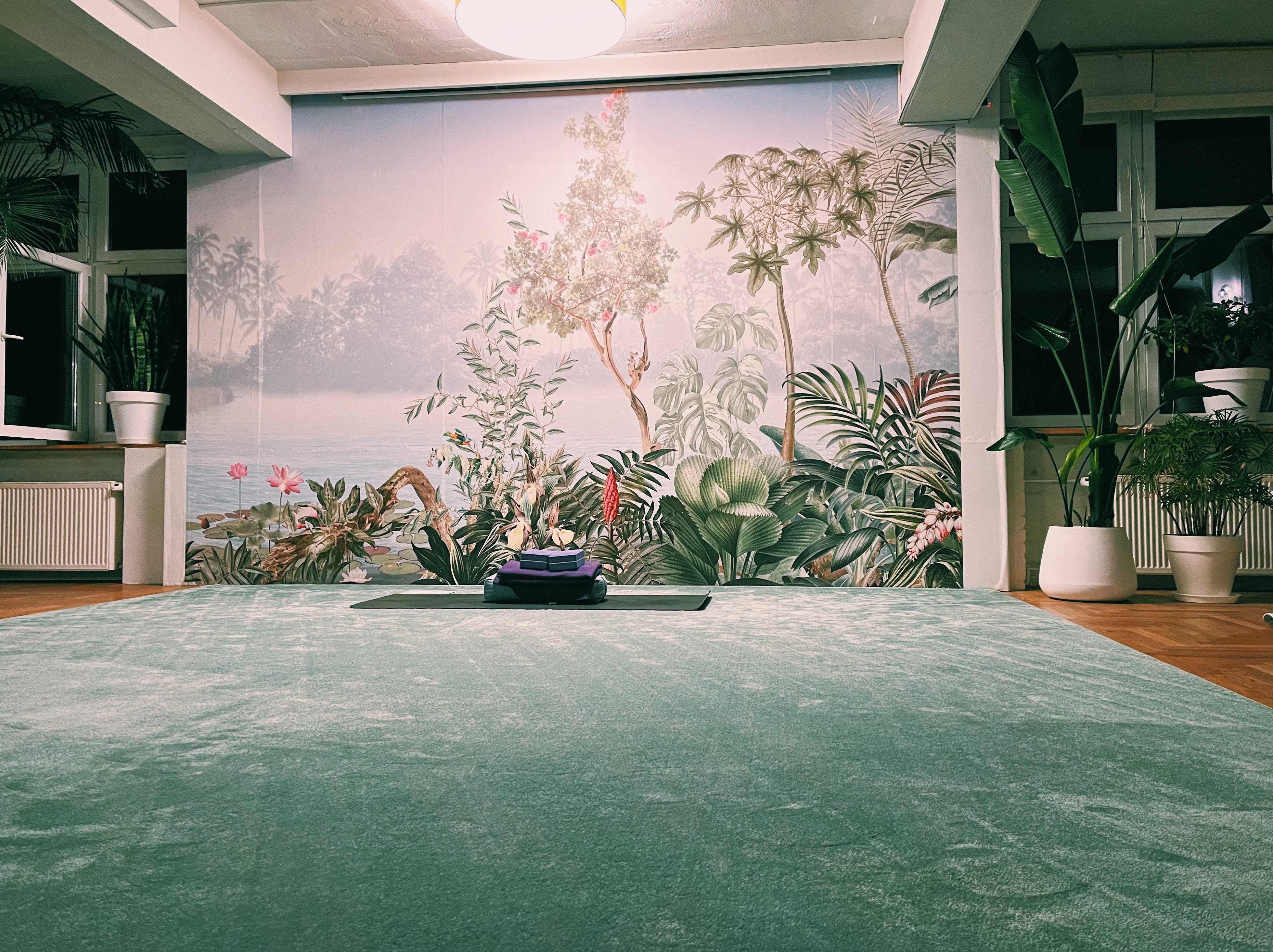
One thing that is recommended often here is USC — ‘Urban Sports Club’ subscription.
It is a great way to try out different studios and types of workouts. I used it for a year at the beginning of my time in Berlin. However, it had several limitations, one of the most significant: the noncommital environment (that is so Berlin).
My current yoga teacher says USC is good if you’re in your 20s, relatively healthy, curious, and don’t have specific problems. I have specific problems. My joints are hypermobile, so I need someone to always check my movements out and correct them if needed (see pulled shoulder example above).
Many people like USC because it is easy to switch between things. You can take a different class every day and never come back without any notice or repercussion.
It’s similar to dating in Berlin. Unmatch when it’s getting awkward or you start attaching. There are so many options that you don’t have to commit. Ever.
I felt the pull to do this, too. The system is built for gathering experiences. And there is a certain freedom in the constant swiping, but it comes with superficiality of the connections.
After joining USC in 2022, my first impulse was to find an Iyengar studio — something I knew and enjoyed. But after a quick search on the app, I found that no Iyengar studio was connected to the network. So I went for something else, and the choice was overwhelming.
The city map on the app looked impressive. Hundreds of activities every day! Maybe I don’t even need to look for Iyengar yoga in a foreign language, — I thought. — Look how many things are available. I’ll try something new out every time and live a rich, vivid life.
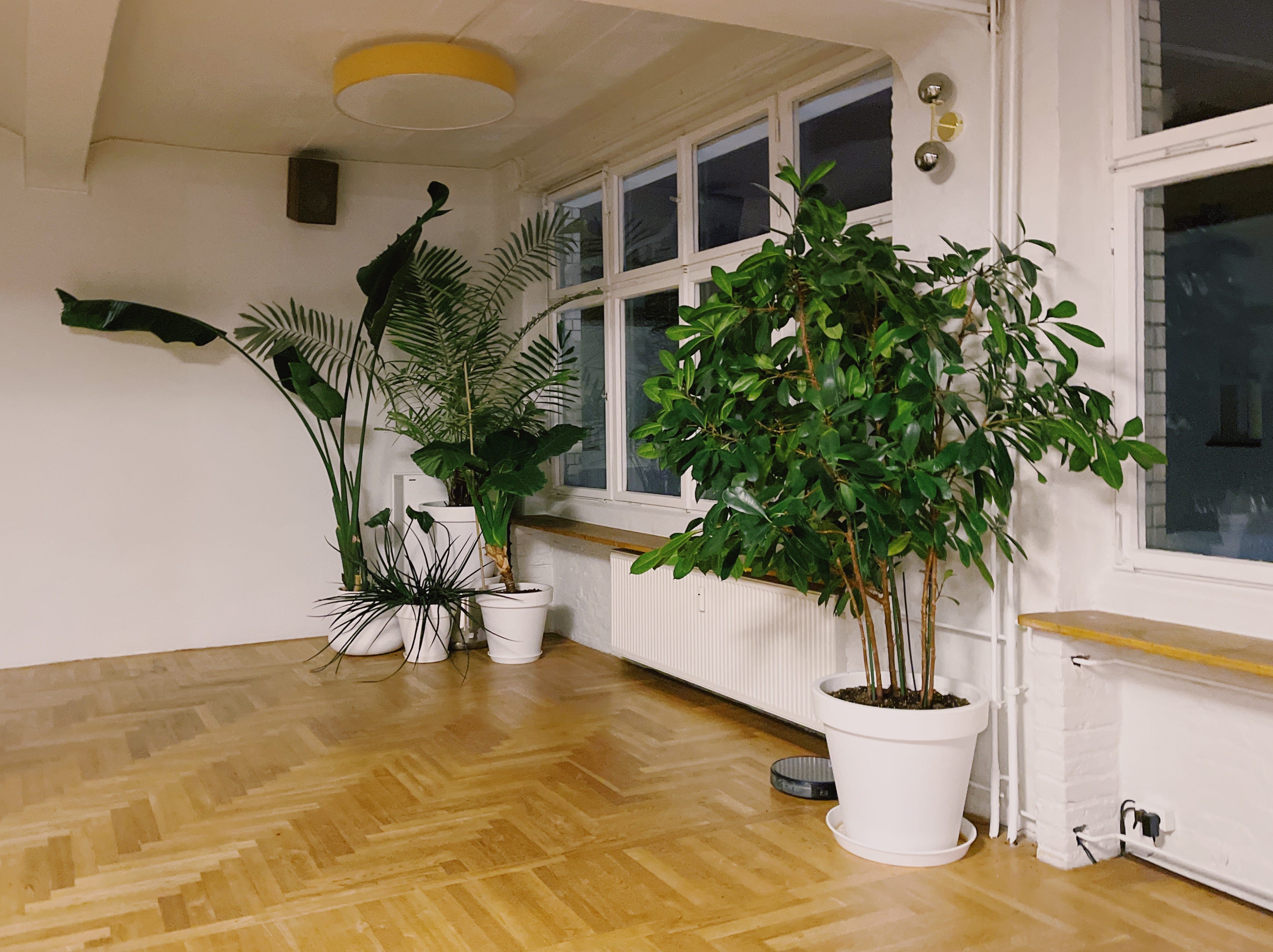
After speaking with people about their sport subscriptions in the last couple of years in Berlin, I found that many didn’t feel they were getting their money’s worth (it’s not only about USC). It’s similar to yearly gym subscriptions. People pay in January, come twice a week until February, and then it’s not so crowded the rest of the year.
With a subscription, you don’t buy the possibility to work out, you pay to silence the guilt about not working out.
It’s a general cultural switch to paying for experiences, or the possibility of them, instead of owning things.
Today you are on your period, next week the weather is bad, then you change the apartment and there is no good Pilates around but the cancelation period is two months and you forgot about it and now it’s too late. I’ve heard many stories like these.
The variety
The bright side of USC is having a reason to visit every corner of Berlin, to check out different types of exercise without signing for each one separately.
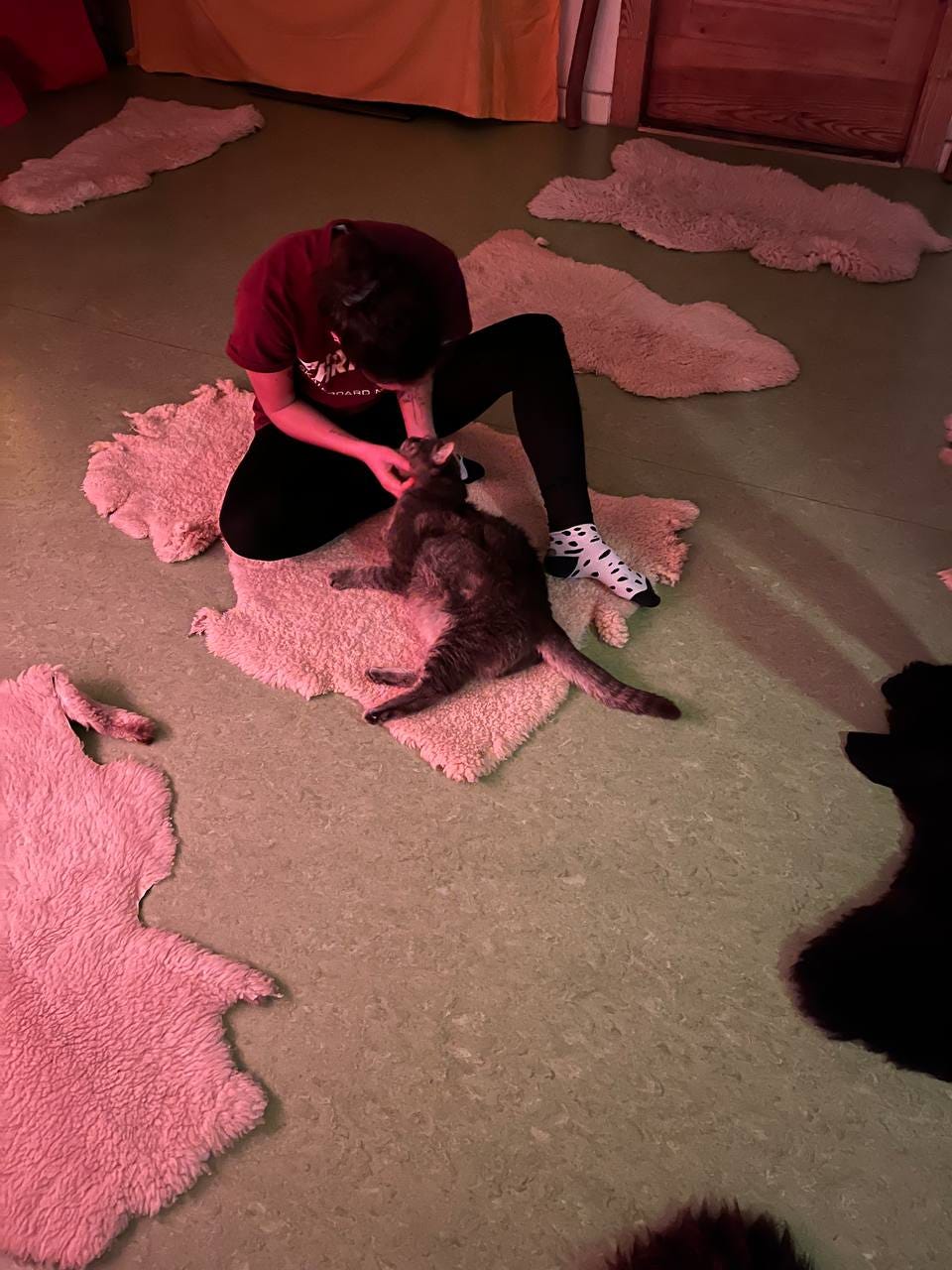
I did a class of zen yoga with cats next to Sonnenallee (pic below). Cats were supposed to sit on us for relaxation, but they weren’t in the mood (allowing for scratches after the session though). We were given fake-fur rugs from Ikea instead of yoga mats: atmospheric but slippery.
I traveled to Zehlendorf to do a warrior pose with women twice my age, to Kreuzberg for a gay yoga class with sporty guys in shorts and blaring techno, to Friedrichshain for a queer esoteric yoga with shaman Tarot cards and aromatic oils (meditations were coming from the book “A Queer Dharma. Yoga for liberation”).
But let’s start from the beginning.
I downloaded USC app and booked my first yoga in Berlin in 2022, hoping it relaxes my body and clears my mind. I was walking to the studio in a brain fog, overwhelmed after a long day of work.
On my way, I recorded a proud voice note for my friend V. about finally doing what I had been planning to for a while. V., herself an emigrant for a couple of years already, sent me a supportive voice note back.
We don’t do phone calls. We’re Russian emigrant older millennials. We use Telegram to record voice notes, sometimes up to half an hour long, and respond when we have time with the same length monologues. It’s like a personal podcast.
— Congrats about your first yoga in Berlin! — she responded right away. — By the way, what language do you think the yoga lesson is in?
I stopped in my tracks. Was it even mentioned? I checked the app. What did I even sign for?
There was nothing specific in the description of an event to signal the language of the session. The name of the class was in English, which meant nothing.
In Berlin, every title of a book, a name of a podcast, an event slogan could be in English, but the content, could turn out to be in German (and vice versa). By then, I had already learned this the hard way.
I recorded a video circle for V. with my laughing, confused face. “You know what? I honestly have no idea! I guess I have to accept whatever it is! I didn’t do yoga for months now, and my body craves for practice again. Worst case, I’ll watch others and copy them!”
V. sent me supportive emojis, and I did my best to find the studio. My first Berlin yoga session, of course, turned out to be in German. With my A0 level, I didn’t get anything the teacher was saying1.
You would expect this experience to be stressful. But it was Ashtanga or Hatha yoga of a beginner level, regular poses I knew how to do.
No one interacted with me. I was able to move my body around quietly, anonymously. I got my dose of activity without spending any energy on socializing, and the overall balance was positive.
The beauty of not understanding
The best thing about German yoga class was actually not turning the brain on, allowing the usual emigrant cognitive pressure to drop for an hour. After months of working in a foreign language (English) for the first time in my life, I was able to hear something I cannot grasp and let it go.
At work, I needed to present myself professionally. I couldn’t afford to miss or misinterpret a word because my visa depended on me keeping a senior-level job in tech. Understanding things at work was tied to my survival. If I were fired, I would have three months to find another job2, otherwise I would need to leave the EU.
The German yoga teacher was definitely saying something, but I didn’t have any ability, nor did I have any need to understand what was being said. It was like a sound bath. Healing and relaxing.
By actively trying this and that out with my USC subscription, I found one type of class that I really liked. I honestly think it saved my mental health during the 2022/23 winter because I had few local friends, enormous pressure at work, and a good cry on a Sunday because life felt really empty.
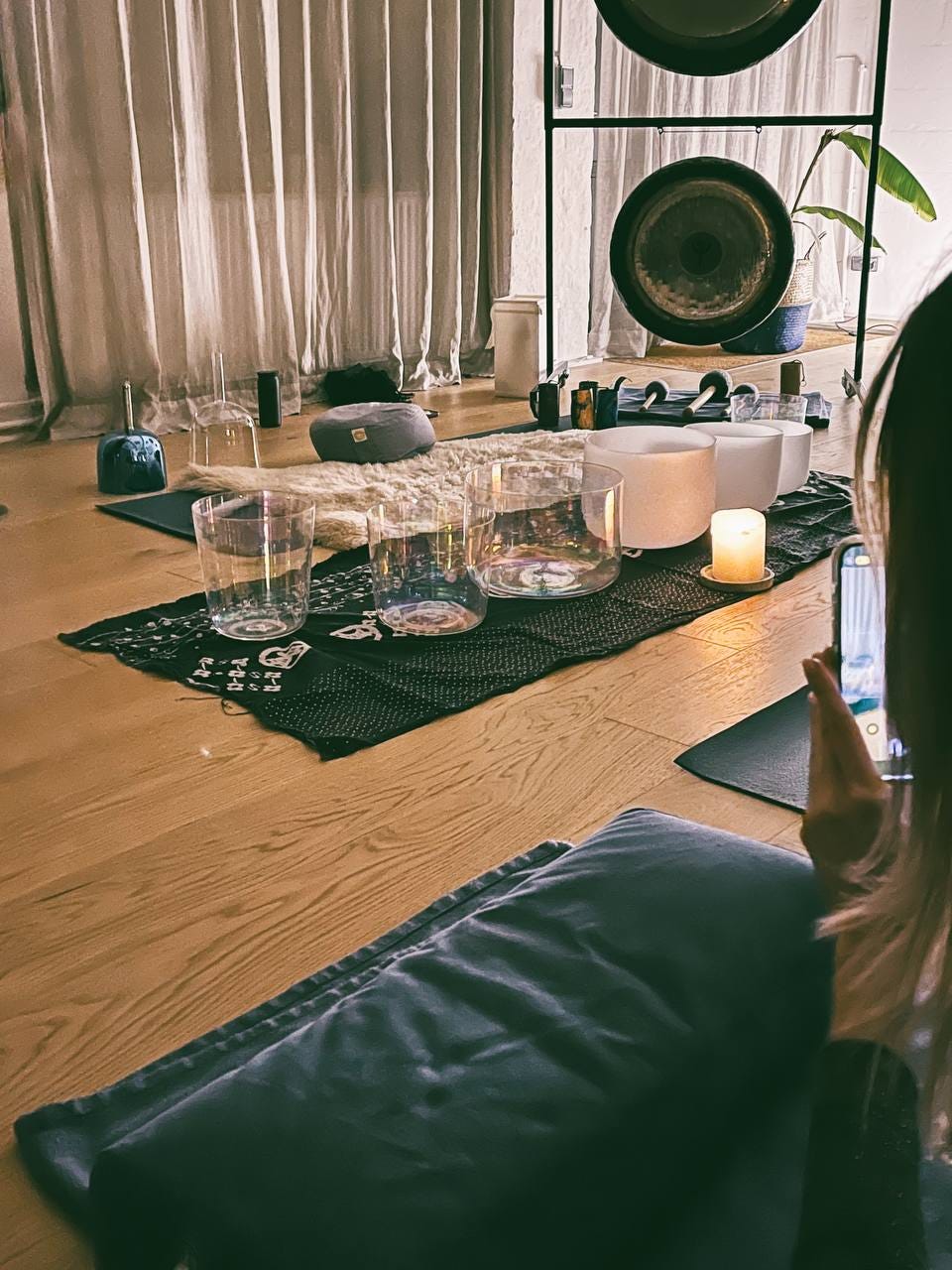
During one English-language yoga session, I’ve heard the teacher promoting her other class — crystal bowl sound bath. As I joined the USC for the physical activity, I wasn’t too interested in laying down for an hour without moving, but I had nothing else to do. And it was included in my subscription.
It turned out to be amazing (see the photo above), and I kept coming back. When a person knows how to work with sound (and Katzi who played the bowls is also a DJ; that’s so Berlin), it doesn’t matter what exactly they play, it is music.
I was coming back every Tuesday for a long time, and it was such a healing hour. Later, I discovered Berliner Philarmoniker and started going there for healing musical sessions, but for some time, I was a regular at the crystal bowl sound bath.
The fitting in
A year after joining the subscription, I booked a yoga session in a part of Berlin I had never visited before. I used USC a lot to push myself to explore new areas. I would pick a studio somewhere, arrive an hour early, and walk around first. Then, after the class, I would eat something nearby and return home. It felt like a small Ausflug, side trip.
On that evening, it didn’t feel like Ausflug. It was again dark and rainy, just like on my first day of using USC. I couldn’t see anything around me in the darkness. Few streetlamps were on. Soaked and shivering, I finally found the entrance on my third try. I climbed the stairs to the studio on the top floor.
Inside, it was warm and bright, dry, soul-saving even. People were quietly arriving to change into the sportswear smoothly and efficiently. I easily found the free yoga mat, the changing room and the toilet — after visiting dozens of similar yoga studios in Berlin I knew how to get around. We all began moving in sync, performing the same movements together. It was beautiful and a stark contrast to how windy and unwelcoming the outside was.
No matter the language used in the room, it felt nice to instantly know what was expected. I felt proud to put my skills to use. It was nice to come together with others. I didn’t even need to buy a yoga mat. The room looked the same before and after I was there. It felt like a train with new passengers taking their places one after another while the train kept moving. Efficient and clean-cut.
Then, the class ended and everyone left, just as smoothly as they arrived, leaving no trace. I went outside, back to the rainy, gloomy street. There was no one I knew who I could say goodbye to. There was no one to miss me if I won’t ever come back.
The temporary assembly felt like a community, but it was too anonymous and noncommittal to be one. We didn’t care for each other, in a good and in a bad way.
It’s been mentioned on my Tiktok feed lately that the price for community is inconvenence.
I didn’t have these words back then. What I had was Brené Brown’s old quote about the difference between belonging and fitting in:
“Fitting in is about assessing a situation and becoming who you need to be to be accepted. Belonging, on the other hand, doesn’t require us to change who we are; it requires us to be who we are.” ― Brené Brown, The Gifts of Imperfection
I was definitely fitting in after a year of learning and adjusting. I was a decent part of any yoga session I joined via the app.
But no one there knew me, so belonging was out of the question.
I could escape all socialization (and any associated embarrassment) through USC. We all carried no cash, checked in via a QR code, took our own yoga mats from the pile, and quietly cleaned them afterwards. There was no small talk or obligation to talk to each other. I appreciate that in general because I hate small talk and feel lost in large groups of people. At the same time, though, it felt really artificial. Too convenient. Hollow, with wind blowing inside.
I did enjoy though some of the things English-speaking yoga teachers used to say. They were meant to explain the movements, but it applied to my life instead.
For example, I wrote this down after a session:
We trust that the integration is not an intellectual one.
“Yeah,” — I thought, — “let’s trust that the experience of emigration will somehow build itself in the end. I don’t need to know today how it’s going to look like in a year.”
It was the winter of 2023/24. I wondered if it was time for me to try Iyengar yoga again.
Iyengar auf Deutsch
English-speaking Iyengar classes were all too far away. I found one German-speaking school close by and decided to try my luck, being at A2 level of German at that point.
“If I could copy what people did at USC yoga,” — I thought, — “maybe it’ll work out here as well?”. I walked to the school, hoping for the best. It was not super close (35 min of walking, no public transport options), but I like a good walk.
The teacher noticed that my German skills were only at the beginner level. She spoke to the class in German for two minutes and then added a couple of sentences for me in English. I was grateful that she managed to include me, since I didn’t get everything she said in quick German (she named more body parts that were included in A1-A2 course and added some muscles on top).
It wasn’t working. My brain couldn’t take the cognitive load of switching between two foreign languages every couple of minutes for an hour after 8 zoom calls on a work day. I crashed and lost all understanding in the middle of it.
I wasn’t able to shift the focus from the brain to the body, which is actually the goal of a session. I was in my head all the time, and that head was hurting.
Later, I read that our brains spend the most energy on switching between languages.
I went home with the tail between my legs and studied German more intensely. I started going to the swimming pool to exercise, but it wasn’t the same.
And then, in October last year, it all clicked. I wandered around my Kiez aimlessly and noticed a yoga studio on a side street, within a five-minute walk. The schedule was fitting. I discovered they are in fact Iyengar. I was starting B2 level, already able to get along in German. I couldn’t believe my luck and was expecting to hit a red flag that would cross out this opportunity, so attractive it seemed, so unreal.
But there was none. I liked the teacher and her sense of humor. We laugh together at moments of miscommunication, and she compliments my increasing fluency. I tell her that in Russian, the Downward Facing Dog pose is called ‘Hund mit Fresse nach unten’. She laughs. Fresse sounds too cheeky.
I sometimes meet my teacher on my way to the supermarket; she lives nearby. I’m committed and no longer anonymous. I have a favorite spot in the room where I always unroll my personal monstera-patterned yoga mat that I bring with me. They will notice if I disappear.
I am one of the youngest among the women, and they always reassure me that once I get into my Wechseljahre3, everything will be so much easier. No periods anymore means I can do the headstand every week, just like every one of them. I have something to look forward to as I age.
There is no esoteric stuff, only the things Iyengar wrote on how to build the pose and how to connect body and the mind, and the personal experience of the teacher to ground the theory.
I can do it in German now. Every Wednesday. And I’m doing it already for a year.

Apart from the word “Jawohl” that felt entirely out of the context because I’ve definitely heard it, but in the movies about the second world war.
It’s a tough ask in the current market, especially if you have a senior or team lead job title. Sometimes I had to go through five, six, or seven interviews with a company before receiving an offer. With vacations and sick time, it could take months of delays on their side. In 2022, I almost got an offer in Copenhagen, but then they hired a CPO. I received a message: “We are ready to hire you, but our future CPO needs to vet you. Her notice period is three months. We’ll contact you once she’s onboarded.” When they finally contacted me, I had already accepted an offer for my current job in Berlin.
Menopause. Literally: the years of the change.