
Berlin, Nollendorfplatz
time travel around the rainbow square
Many people have a romantic story about how they ‘decided to move to Berlin.’ The reasons could be hip lifestyle, relatively cheap something (it depends on what you compare with), cool people, queer scene.
My story is different. I was never a big fan of Berlin or Germany as a tourist, although I visited often. As I understand now, the barrier was linguistic: with zero German, I could only scratch the surface, and it was boring.
It was random luck that brought me to Berlin. The city grew on me, and I really enjoy living here now. But as I was looking for a job in 2022, frantically applying to anything from the search results of “Product Manager relocation” on LinkedIn, I didn’t care for the destination.
The first offer I got was from Copenhagen. It was quickly put on pause, though, because of a personnel reshuffle. When Copenhagen reached out again, ready to sign, I was already packing for Berlin.
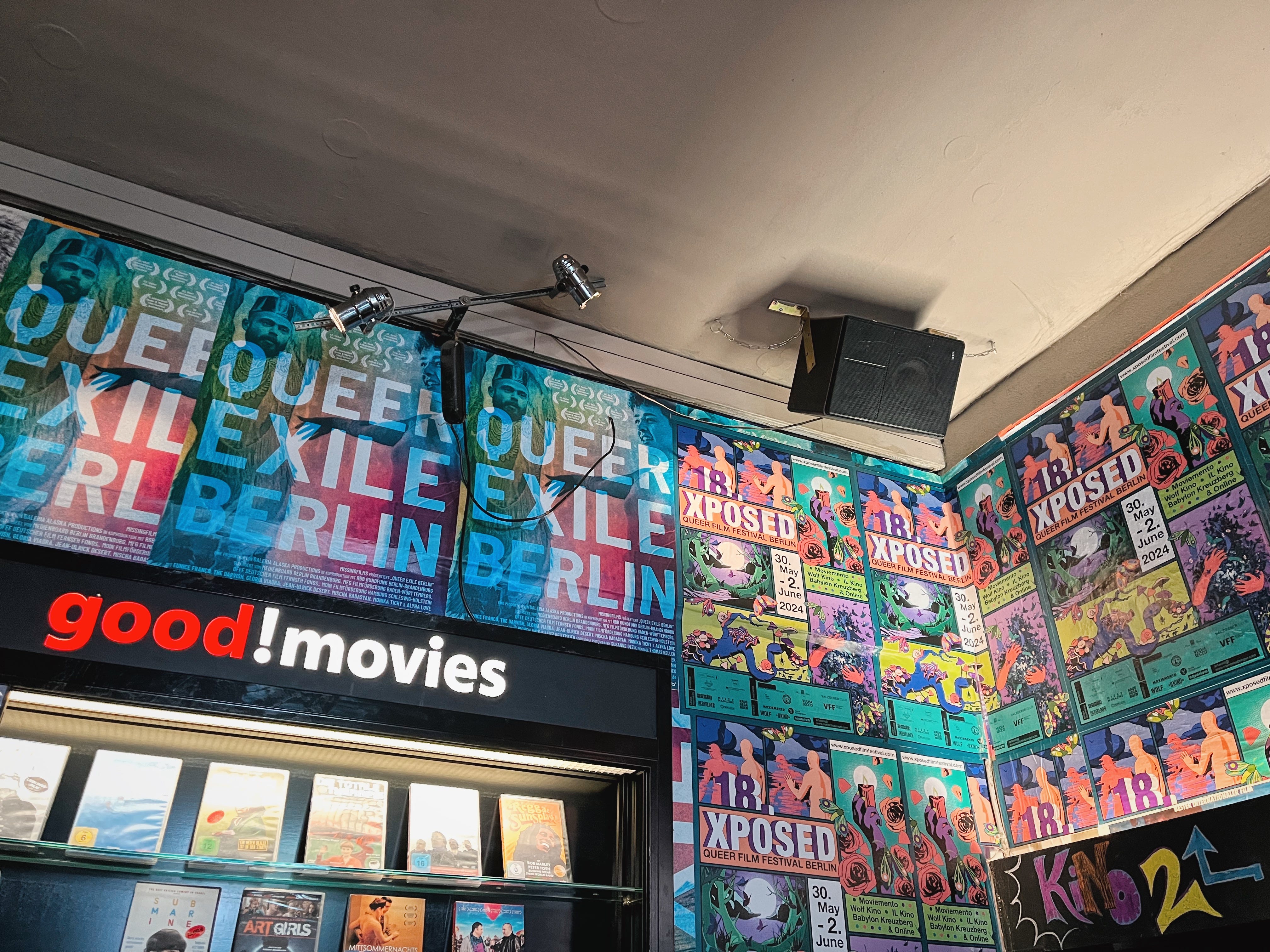
It was random luck that brought me to Schöneberg. I got a hint that an apartment was opening up, and I said “yes” before I learned about the price, the address, or looked at the pictures. I knew the situation with the rental market, and I was already burned out after going through 53 online job interviews in two months in my second language, so I was realistic about my capacity to pick and choose. It was negative. And I needed to start learning my fifth language: German.
I needed a home, and I found one. It was in Schöneberg.
As I wrote about my district in the Kiez Guide for Späti Stories,
In the beginning, I said to someone who’s been in Berlin for a long time, “It looks like a queer area.” They frowned and answered: “It is gay. Not queer.”
And I get this comment. The area around Nollendorfplatz has lots to offer to gays specifically — men, often white, often older, often well-off enough to afford a leather suit required for some local venues. On a Friday night (or during Folsom festival), it might look like it’s the only story. It is not.
Nolle is historically queer. It isn’t only the area where Christopher Isherwood rented a room, writing the book that becomes Bob Fosse’sCabaret. The cult Eldorado bar was here, as well as many other community places. The great Berlin singer Claire Waldoff lived in Regensburger Straße. It was a rainbow quarter 100 years ago, and it still is.
There is a street full of Turkish supermarkets with amazing fresh produce (Hauptstraße/Potsdamer Straße) because Schöneberg, alongside with Kreuzberg, was welcoming the immigrants. David Bowie’s apartment in Berlin was in Hauptstraße (see bar Neues Ufer). A district has many stories.
Nolle is as much the area of the older white couples that sip cocktails in Romeo+Romeo as it is the area of the Eldorado bar before it was turned into a Bioladen1.
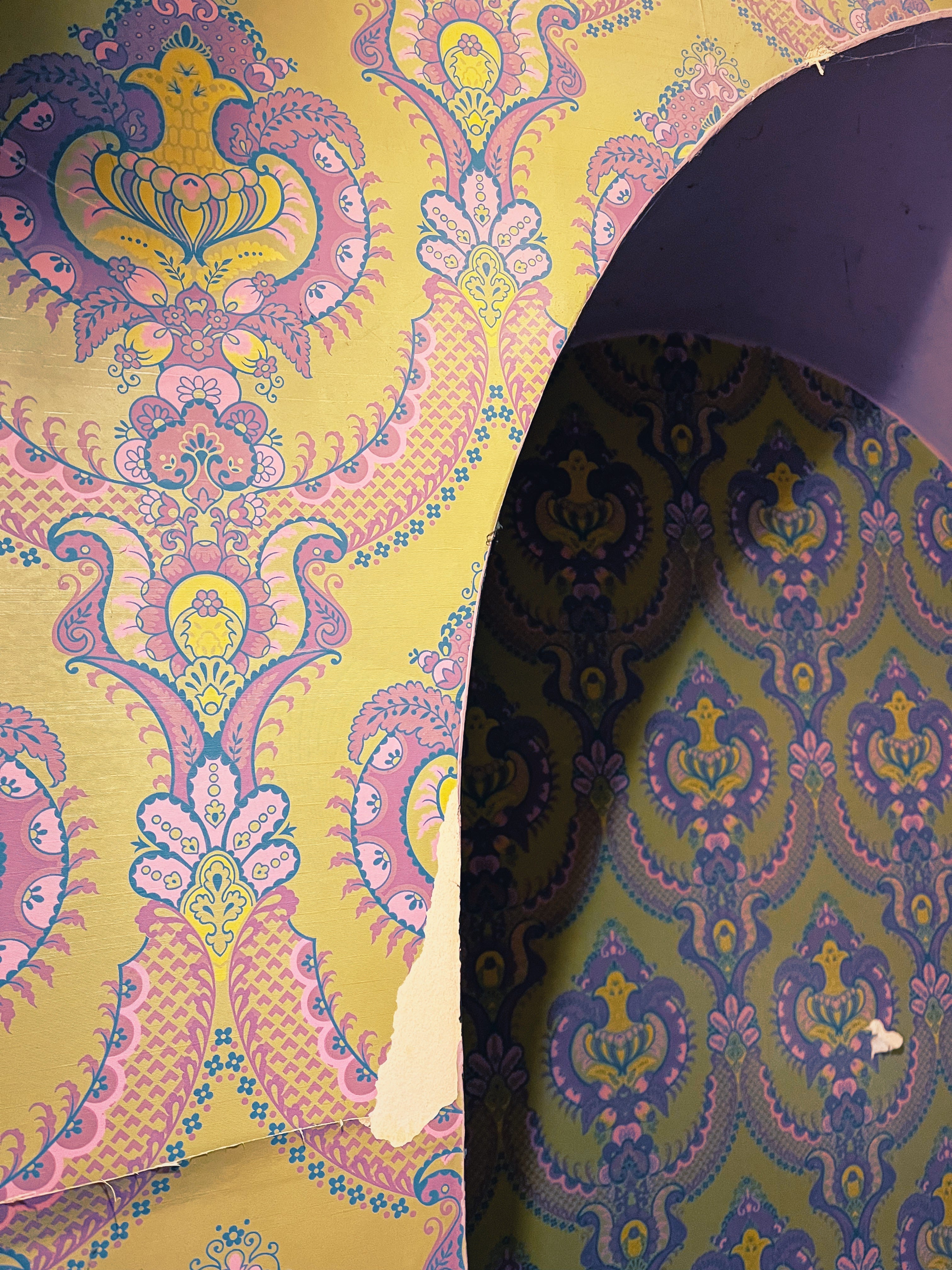
Recently, U-Bahn station Nollendorfplatz was officially named Regenbogenkiez2. The station already had a rainbow hat, best seen during the night. It was a temporary project installed by Lichtkünstler3 Moritz Wermelskirch in 2013 — so loved that it wasn’t removed; the community decided who would foot the electricity bill. The area feels queer-friendly, or at least gay-friendly; everything is painted rainbow.
I remember finding ‘gay maps’ in the souvenir shops as a tourist in Europe twenty years ago, when I still lived in Russia and ‘was passionate about traveling’ (meaning: could breathe freely in my country only when I had an outgoing ticket with the future date). I remember being so happy to collect these maps and study the spots described there.
It felt like a parallel reality, something free and cool. In this world, called ‘Gayrope’ by the propagandists of my country, gay spots existed in the open. I tried to visit as many spots as possible, trying to find something for me. It was hit or miss. Mainly miss.
I remember coming to Nolle more than ten years ago with my then-girlfriend and looking around. We were preparing for this visit, researching online and saving spots on the map. We expected to belong, feel free, and live the rainbow life of Europe. We didn’t find anything to participate in once we unboarded the U-Bahn. We were confused.
People were living their lives, chatting in friend groups, sipping drinks. We were welcome to shop and drink, of course. But there was a glass wall between them and us, and not only the linguistic one, or a gender one, or a strong passport one. It was an emotional one, a feeling-secure-in-your-life one, an I-will-have-to-go-back-soon one, a this-is-only-a-quick-escape one, a nothing-really-changes-in-my-real-life-after-this-trip one, an I-tricked-myself-into-believing-I-can-belong-here one.
We didn’t belong one bit. We had to travel back soon due to visa and financial reasons. The drinks we ordered were quickly converted into Rubles in my head. We could easily go to the supermarket with the rainbow flag instead and buy a bottle of wine. Or, the supermarket without the rainbow flag. What was the difference for us, specifically? What was there for us?
What could Gayrope offer, actually?
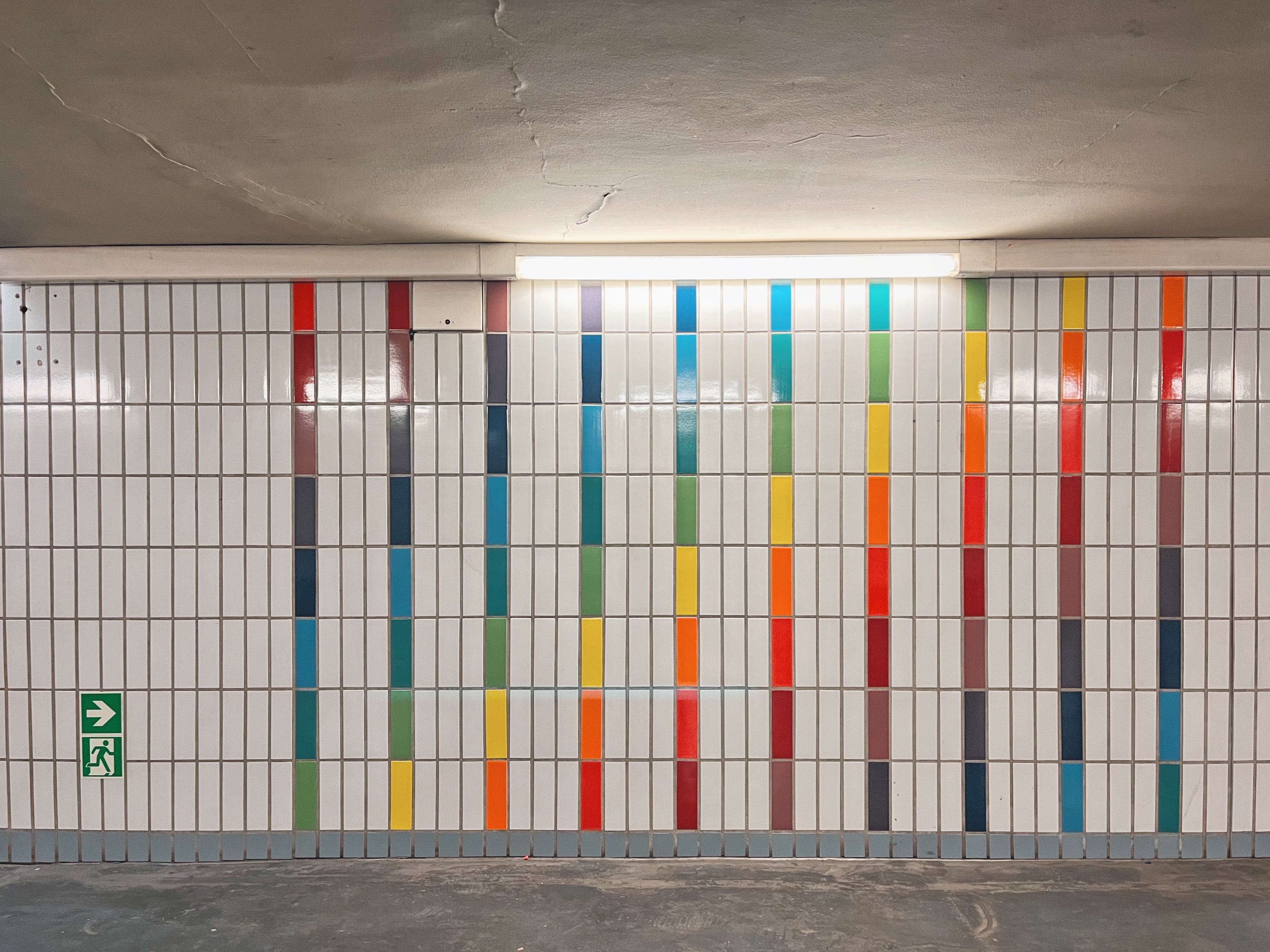
August 2009, Amsterdam
In 2009, I lived in St. Petersburg. I met my partner of that time at work. We both weren’t from that city, and we both loved to live there. Queer people often moved to the ‘cultural capital’ because it allowed for more personal freedom of expression. The city is also beautiful.
We worked on the same team as project managers at a tech company. I later became a team lead there, and she became an art director. The company gave us laptops and paid for our lunches. It felt like we’d hit a jackpot. We could finally afford to buy things and travel. We both wanted to see the world. We went as close as Belarus and as far as Cuba and everything in between.
We had hungry eyes, and we were happy together. We were out to our families and our close friends. We couldn’t hold hands walking on the street, though. We wondered how it was in different countries.
In Minsk, Belarus, it was similar (no hand-holding) plus even more staring on the streets. We both enjoyed wearing bright colors.
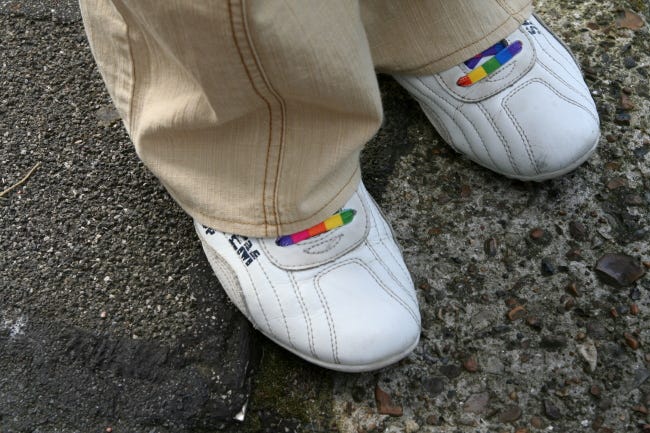
In Amsterdam, it felt different. We saw a lot of rainbow things on the streets. In the souvenir shop, we’d bought a rainbow umbrella, a tilted rainbow cup “I’m So Gay I Can’t Even Drink Straight”, rainbow shoelaces, and some magnet fridge poetry. It was really cool to be able to bring some rainbow home.
But outside our apartment back home, I still wouldn’t be able to hold my partner’s hand. Which didn’t feel like a problem because I was used to living like we did, private and happy. My goal at the time was my personal comfort, and for a bit, it was working out well.
We were able to afford a trip to Europe. That was a privilege, all due to our tech jobs. My partner of that time initially studied journalism but had to switch to tech. She wanted to be able to buy jeans not only when the only old pair is torn and needs to be thrown away. Tech fixed that problem, opened the world to her, and brought us together.
I probably envied people who lived in Amsterdam back then. I would guess they had more personal freedom. But I didn’t seriously consider comparing us. They were lucky to be born in such a place, or with such a strong enough passport to live there. What did it have to do with me? My luck was different. I had to find ways around it. I needed to find a way to play the cards I was dealt well. If I wouldn’t do it, no one else would help me.
We came to Amsterdam for a couple of days. Rented an apartment in the basement: moldy, no windows, cold. But it was in Amsterdam, and we could afford it. We came back only to sleep, so we didn’t need anything special anyway. It still was a privilege to be there.
We found a ‘gay map’ of the city in a souvenir shop. We located the feminist, lesbian bar. Some people were sitting at the counter, and some were at the tables. We’d sat down and ordered drinks.
What was gay and lesbian about that bar? I mean, probably the visitors. The women looked queer to me. Although no one showed any interest in chatting with us. But I was happy no one wanted to chat. What was there to chat about?
In 2009, I didn’t speak English freely, despite studying it since I was six. There were close to no opportunities to practice, so it was a chicken-and-egg problem. I didn’t practice; therefore, I didn’t feel my English was strong enough to practice. I wasn’t even able to read in English leisurely.
In 2010, my job would send me to the 2-day intensive workshop in Dublin. There, my brain would break out and conquer the language. After I returned home, I started reading in English — first, for work, and then, for leisure. Bit by bit, I was becoming fluent.
In the bar, we finished the drinks we’d ordered, looked around, and went for another walk. I felt disappointed. It was advertised as something non-heterosexual, but my experience there was not too different from a visit to a heterosexual cafe.
Maybe we could have kissed there openly, and no one would be angry? But we weren’t used to kissing outside of the apartment anyway, so there wasn’t a need to do so. Furthermore, it didn’t feel like kissing on the street or in a McDonalds would be a problem in Amsterdam.
We mostly wanted to hold hands, hug, and joke around. So we didn’t get anything out of visiting a special bar — and we didn’t think at that time that supporting friendly places with money actually helps them survive, or that we had specific privileges that not everyone has (renting an apartment to hold hands in, for example), that a lack of a difference in feeling safe in different places was due to how we were seen (skin color, being cis, etc).
All this will come to me later. In 2009, I thought in a very individualistic way. Just as I’ve been taught at home, at school, and by my country.
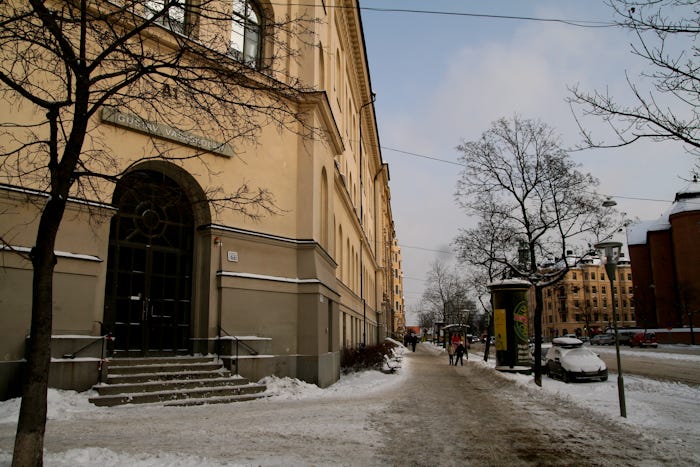
February 2010, Stockholm
Next, we went to Sweden. It was cold outside, around -20°, so researching indoor venues was even more important. We found a ‘gay map’ and quickly walked to the spot that was mentioned there.
The same thing happened again. We were in a place that had a rainbow flag on the door and some ‘gay maps’ in the flyer corner. Apart from that, it felt similar to any other venue. We had a couple of drinks and returned to the hotel, disappointed.
June 2011, Paris
In Paris, we walked around the Marais district, having learned that it’s the gay area. It was mostly men, alone and coupled, walking around, looking happy. Maybe they were tourists. To us, they all looked European, foreign, different. We couldn’t really identify with them, although it felt good to be there. Everyone laughed and smiled.
When living in a homophobic society, where you are afraid to tell a colleague who your partner is, let alone visit them in the hospital (my partner lied and said she was my sister, so she was allowed to visit me), all the societal pressure creates a very strong bond. Traumatically strong.
It’s not easy to find a partner again, so you never want to let go of this one. It’s possible only to hold hands at home, so this secret becomes so important and so big. It’s ‘us against the whole world’ that doesn’t recognize us as a real couple. We watched “If These Walls Could Talk 2” together and knew very well what that was about.
This was also the reason for breaking up later: we merged so intensely that there was no air left to breathe. After she left me, I cried every day for six months. All my life was tied to her life. I forgot what I was like. Then, I woke up one day and started building my new life, alone. I learned my interests anew and met people I found interesting.
One thing I started doing was solo traveling. I still had that tech job with a good salary. I booked weekend trips: to Berlin, to Lisbon, to Barcelona. I wanted to feel something.
I wanted to feel a part of the big world, even though there was no one whose hand I could have held, outside or in the hotel room. I was lonely: a change of scenery distracted me. I was drawn to places where you could see a rainbow flag in the open. It felt like a breath of fresh air, even though I’d have to travel back afterward.
After traveling back, I would buy another airplane ticket. Then, it was manageable.
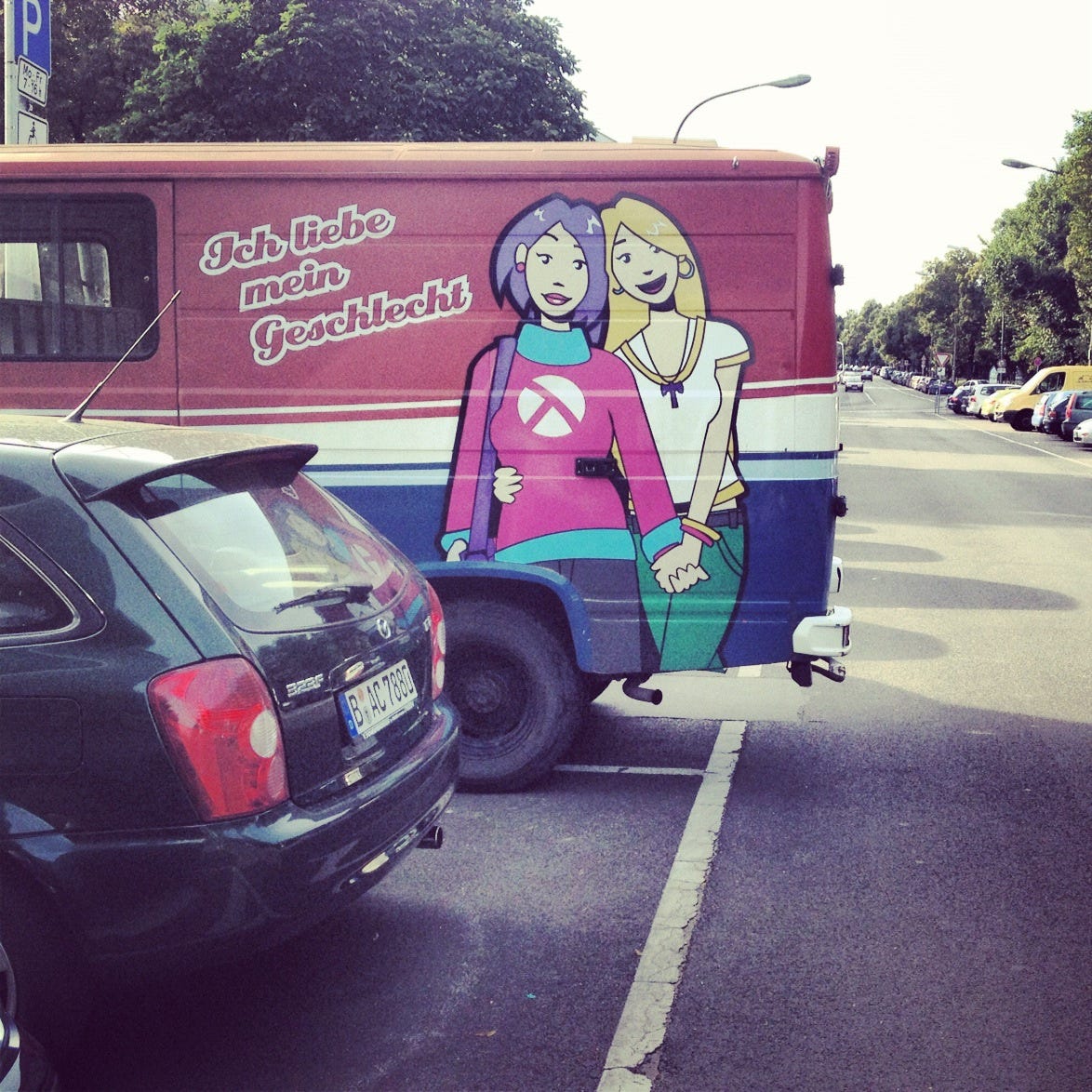
April 2012, Berlin
I came to Berlin again, just for a weekend. Air Berlin was relatively cheap. Or, the oil Ruble was relatively strong. Oh, the time when 39 Rubles would have given you 1 Euro.
Here is the old newsletter that I found, translated:
Until Sunday only! Fly Air Berlin in 2012!
→ Special offer starting at 5,399 RUB
Moscow – Berlin from 5,399 RUB
Moscow – Munich from 7,899 RUB
Moscow – Vienna from 8,328 RUB
St. Petersburg – Berlin from 6,139 RUB
I still tried to research local gay stuff, but I already knew that there was nothing to catch in the bars for me. I am too shy to approach strangers for a chat, and I hate small talk. And there is only so much rainbow shopping my wallet could do, even with a good currency rate.
One thing attracted my attention though. It was Schwules Museum, ‘a gay museum.’ I hadn’t heard of anything like this. I was curious. With no knowledge of German, I hoped to understand something.
In the museum, everything was actually in English. And it finally wasn't about purchasable rainbow objects but about the lives of people I could identify with. It was showing me the collective, community side of life, which I didn’t connect to in my individualistic approach.
Finally, something new to learn. And it was queer, too. But in a different way.
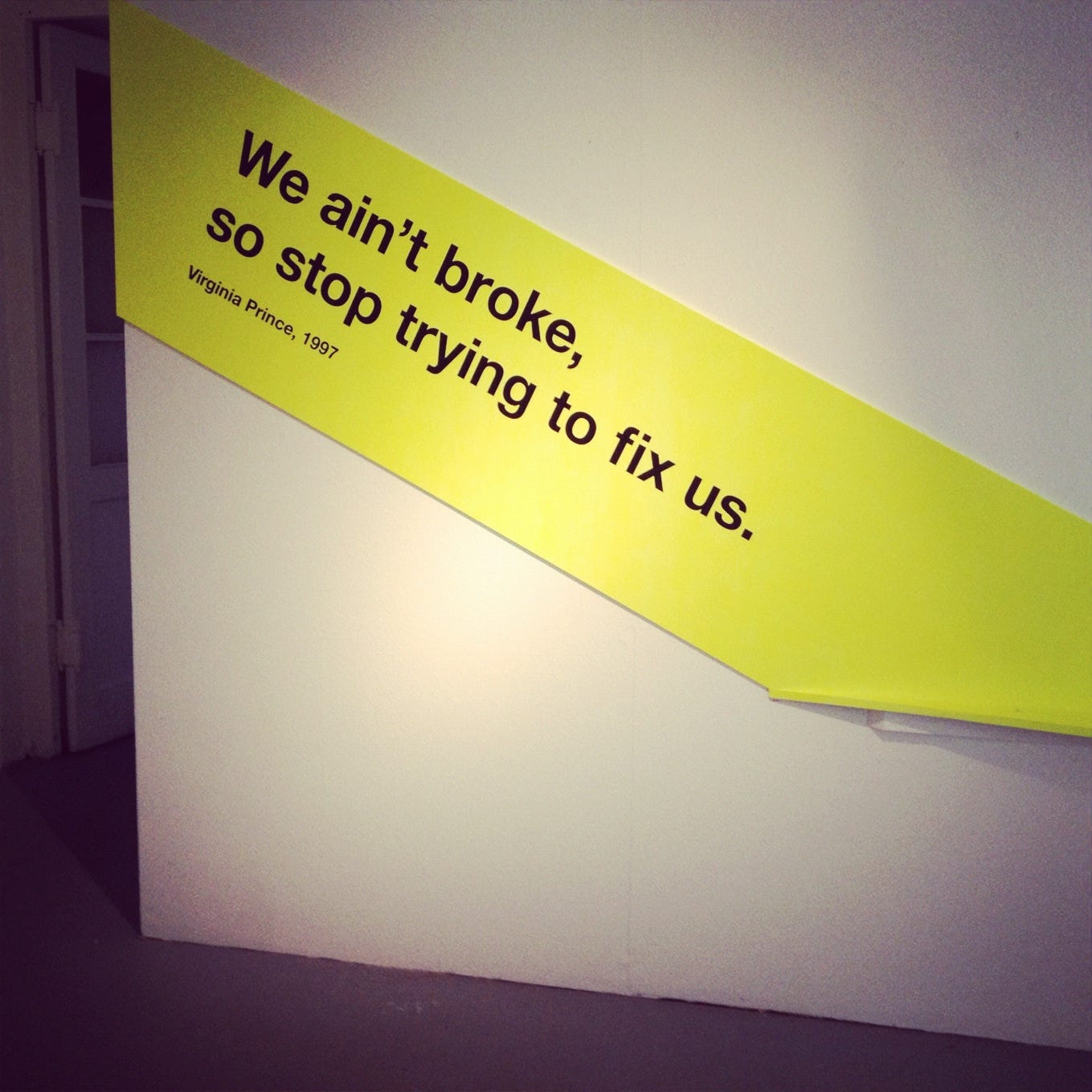
I took a picture of a yellow strip with a quote. Later, having returned from the trip, I keep coming back to that quote again and again.
At some point, I found myself crying and journaling. I started to feel that the problem is not personal, but systemic and structural. I started to feel there might not be a thick glass between them and us, people with better passports and me with my short-visit visa. Other connections opened up. I didn’t have to feel isolated. I could also feel connected.
Before 2016, I thought feminism was not for me, because I date women. I agree it’s silly, but I also didn’t know anyone who would have thought otherwise. From the outside point, it felt either useless or men-centered, so I wasn’t interested. But then, I found the way in.
In 2016, I was 31. I didn’t know anyone who would name themselves a feminist. But then, I started feeling I was one.
In 2016, I entered the intersectional feminism rabbit hole. It all started making sense, and queerness was only a part of it. The anger came to the surface. So it wasn’t all my fault? It wasn’t that I didn’t try hard enough, then, or that I was born in the wrong place? I read Naomi Klein. I read Caroline Criado Pérez. I read Emily Chang. I read Amy Gahran. I read Liv Strömquist. I read Cordelia Fine. I read Katrine Marçal. I read sisters Nagoski.
It appeared that my problems were not special, and there were people who have long been thinking about it. They were women. I felt nauseous from learning so much, but I could see clearly how not being allowed to hold hands was not an isolated problem at all.
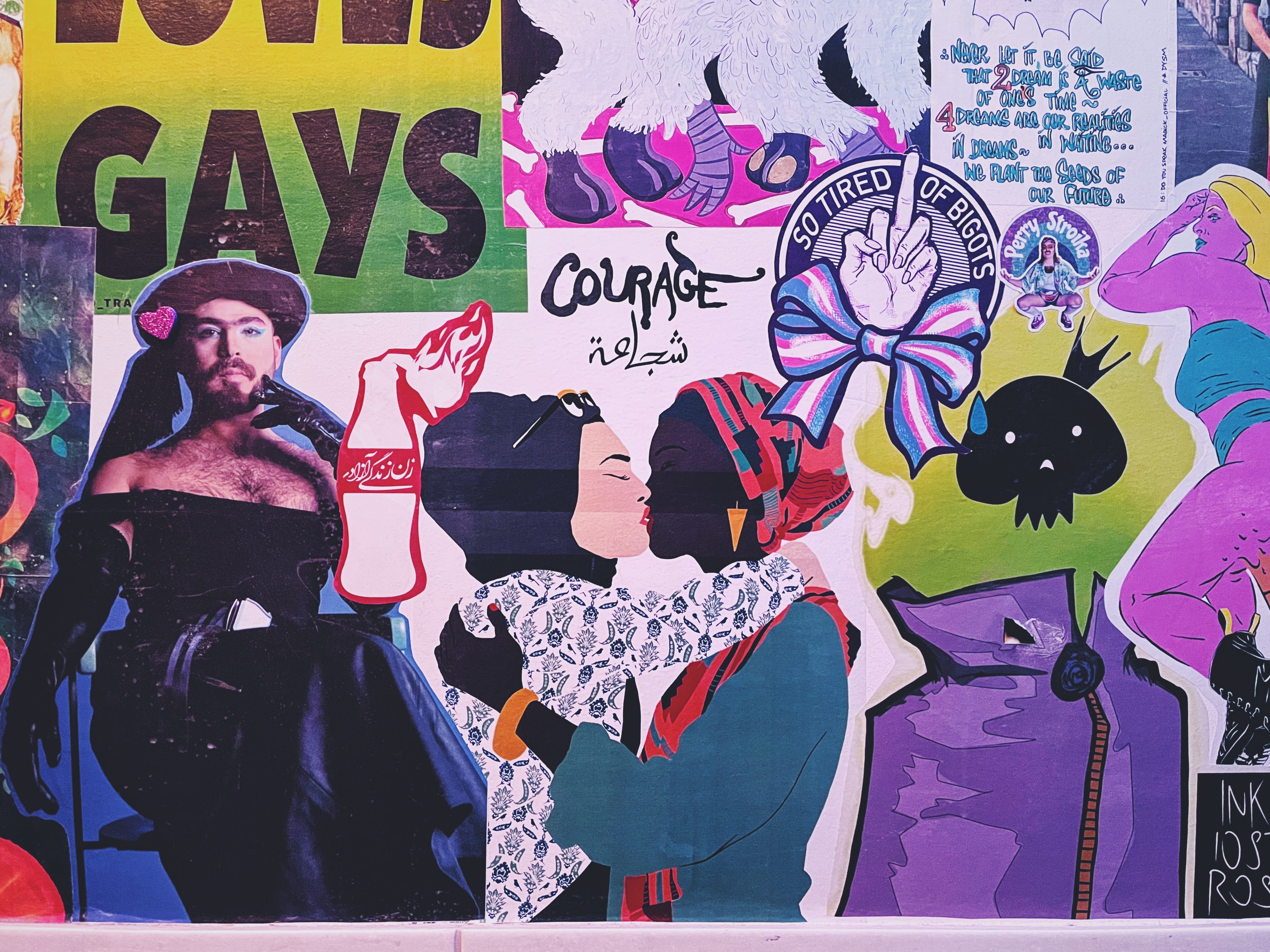
Schwules Museum is not in Schöneberg, although it’s not too far from it. Technically, it’s in the Tiergarten city district. But it’s just ten minutes walking from the same Nollendorfplatz we’ve started with.
I make that walk now quite often, since I live so close now. Passing the rainbow cafes with groups of friends enjoying themselves. Not feeling isolated at all. It’s just not my type of fun, turns out. But there is something for me in the area, too.
Thank you for reading 🫶🏻
I am happy to hear your thoughts — in a comment or email.
Fancy supermarket
The rainbow city district
Light artist
I remember the Stockholm winter of 2010, it was our first winter here and the darkness and the cold was something to get used to..my daughter was 7 at the time and was fascinated by the little animals jumping in our garden...like Narnia she said...February is generally speaking not the best time to visit..but anyway..I think the gay culture is generally well integrated in Stockholm and I believe people don't look for separate venues..at least that is what I picked from some gay colleagues.
„It was an emotional one, a feeling-secure-in-your-life one, an I-will-have-to-go-back-soon one, a this-is-only-a-quick-escape one, a nothing-really-changes-in-my-real-life-after-this-trip one, an I-tricked-myself-into-believing-I-can-belong-here one.“
I love this passage, so well written.